What to see in Bucharest: 20 attractions with itinerary and map

  1. Romania
  2. Bucharest
  3. What to see in Bucharest: 20 attractions with itinerary and map
all year round
3-5 days
cheap
loads of meat, potatoes, bakery goods

What to see in Bucharest: 20 attractions with itinerary and map

I’ll be honest with you: I flew to Bucharest with very low expectations. I imagined a dull city, badly damaged by the communist era from an architectural point of view, with very little to do. After all, people don’t talk about Bucharest the way they talk about Prague or Budapest — I’d only ever heard of it as a starting point for visiting Transylvania.

Instead, I found a surprisingly beautiful city, where brutalist buildings stand next to charming neoclassical palaces, with a mild spring climate (I visited at the beginning of April), lovely places to eat or grab a drink, delicious food, and genuinely affordable prices. Romanians seemed calm and quite similar to us Italians in many ways. I always felt safe — whether I was on my own or with friends, at 6 in the morning or 11 at night.

I spent 5 days in Bucharest, including one day on a short tour of Transylvania, and here I’ll share the 20 best attractions to visit in the city.

Let’s go! Disclaimer affiliates

Where to sleep in Bucharest

For several reasons, I always recommend staying in the city centre wherever you go — you’ll be close to the main attractions, restaurants and bars, and it’s much easier to get back safely in the evening.

In Bucharest, that means looking for accommodation in the Old Town, which is lively at night and within walking distance of pretty much every attraction.

I found a lovely apartment right in the heart of Lipscani: small but spacious enough for 4 people, very central yet quiet because it’s tucked away inside a residential courtyard, and reasonably priced (€416 for 4 adults, 5 days). It’s called the*[Victoria duplex apartment*. At the moment, though, it’s not accepting bookings, so here are a few alternatives in the same area:

Itinerary for visiting Bucharest in 3 days + map

bucarest

The centre of Bucharest is quite small and easy to explore on foot in about three days. All the main attractions, as well as restaurants and museums, are fairly close to each other. But without a proper plan, you might end up wandering back and forth, getting tired and wasting precious time.

So here is my 3-day itinerary for visiting Bucharest, along with a map you can use for reference. After that, I’ll go into detail about what to see and do.

Here it is:

Day 1: Old Town

  • Lipscani Street
  • Cărturești Carusel
  • Macca-Villacrosse Passage
  • Stavropoleos Church
  • CEC Palace

In the Old Town area, don’t miss a stop at Grand Café Van Gogh (breakfast/brunch/lunch), Caru’ cu Bere (lunch/dinner), and Manuc’s Inn (lunch/dinner).

Day 2: Parliament and museums

  • Palace of the Parliament
  • Victoria Passage and English Passage
  • National Museum of Art and European Art Gallery
  • Romanian Athenaeum
  • Nicolae Golescu district
  • Cișmigiu Gardens

Another recommended restaurant serving traditional Romanian food in the museum area is Excalibur (just mind the portions, they are huge!).

Day 3: Parks and thermal baths

  • Morning: Village Museum in Herăstrău Park, passing through the Arch of Triumph
  • Afternoon: thermal baths

Both the Village Museum and the thermal baths have food areas, so you won’t need to worry about lunch or dinner.

Guided tours in Bucharest

If, like me, you like to get a general overview of a city’s history and culture before visiting its museums and main sights, you can join one of the guided tours in Bucharest. There are quite a few options, both free and paid, covering different themes, all led by expert guides who know the city very well.

I’ll leave a few links where you can book your guided tour of Bucharest:

Let’s move on to the much-anticipated list of the 20 attractions to see in Bucharest!

Lipscani street

The Lipscani area is the heart of Bucharest’s Old Town.

From the Middle Ages until the early 19th century, it was the most important commercial district in the city and in Wallachia. Its name comes from Leipzig — or Lipsca in 17th-century Romanian — the German city from which many of the goods found on the main street were brought in. The word lipscani referred to “traders who brought goods from Western Europe”.

This was where all commercial and craft activities took place, and even today the streets of Lipscani still carry the names of the old trades that worked there: Blănari Street (furriers), Postei Street (postal workers), Șepcari Street (hat makers), and so on.

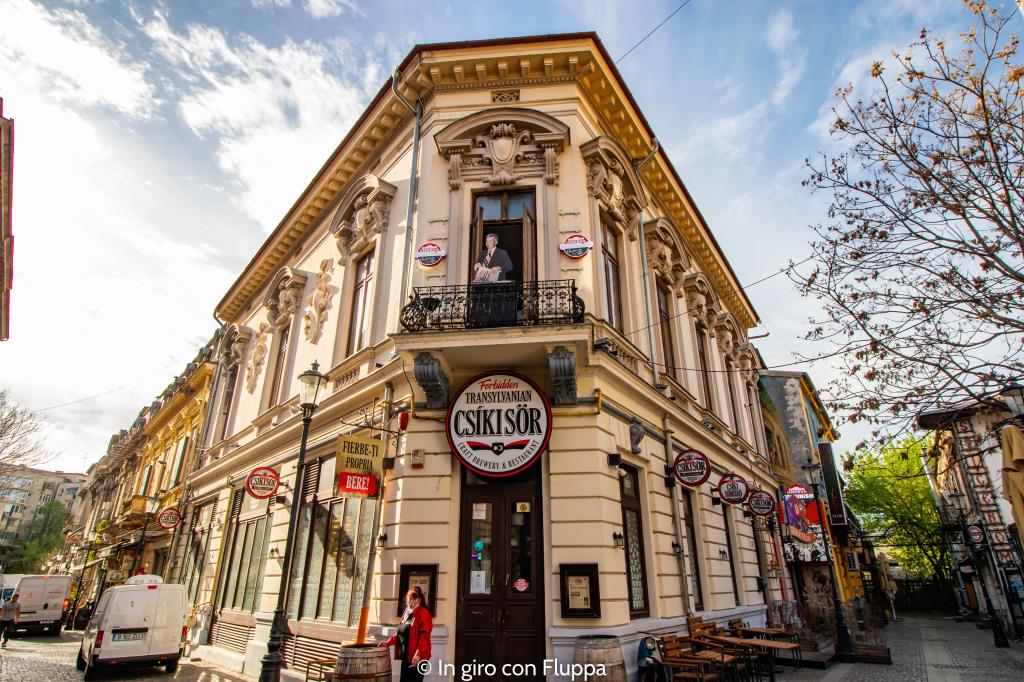
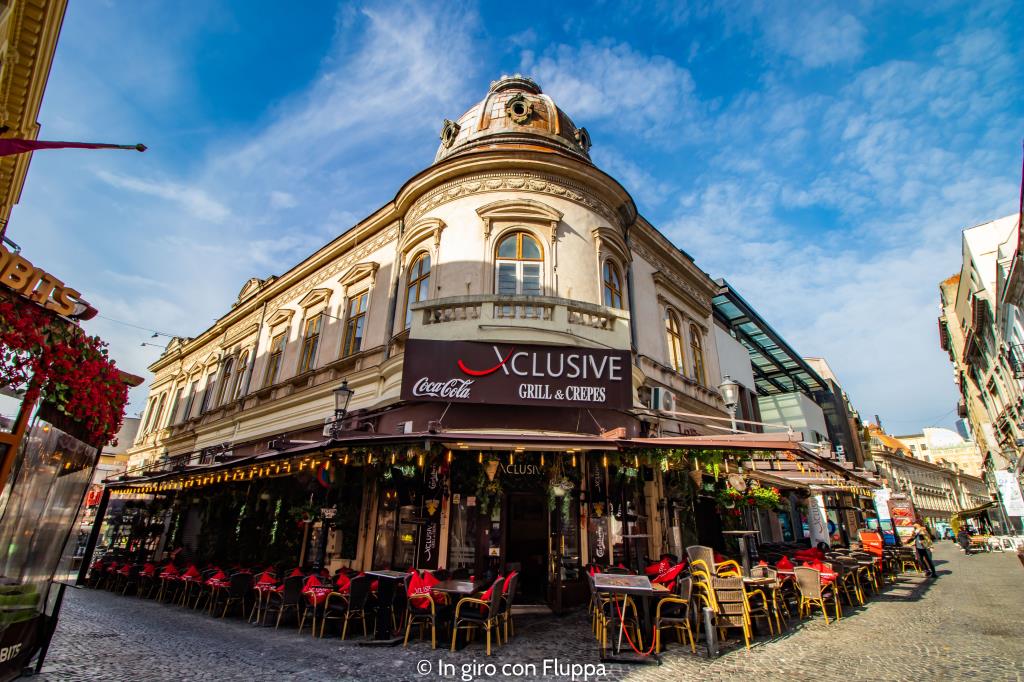
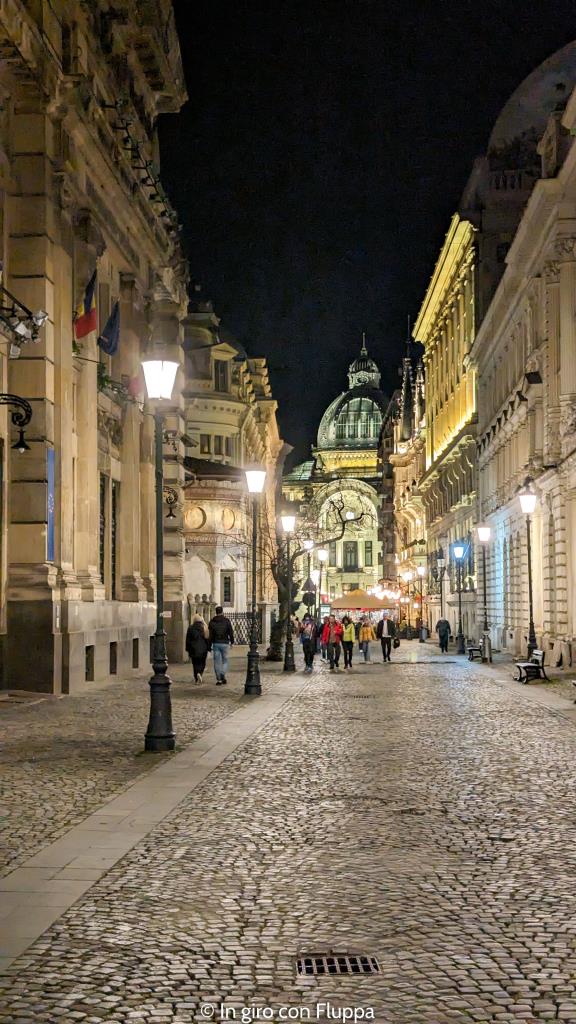
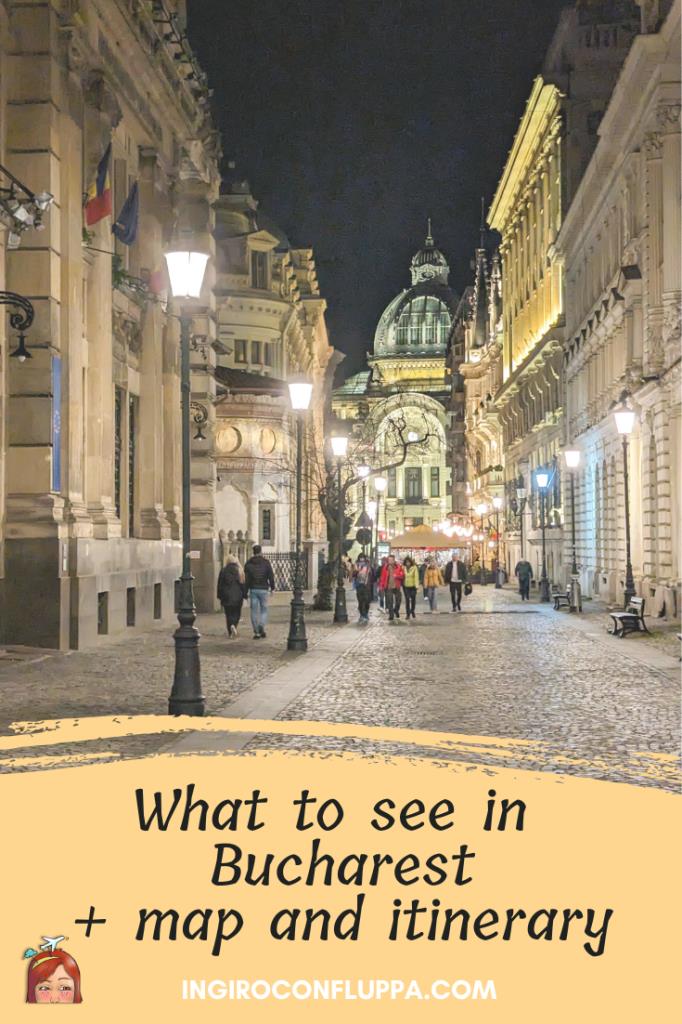
Today, Lipscani Street is a pedestrian area, full of low-rise buildings with beautiful decorative façades, cobbled streets, and plenty of restaurants, shops and bars.

If you manage to find a hotel or apartment in this area, you’ve really struck gold — everything is within walking distance, and you won’t need to walk through dark streets at night, as this is where the nightlife is concentrated.

Grand Café Van Gogh

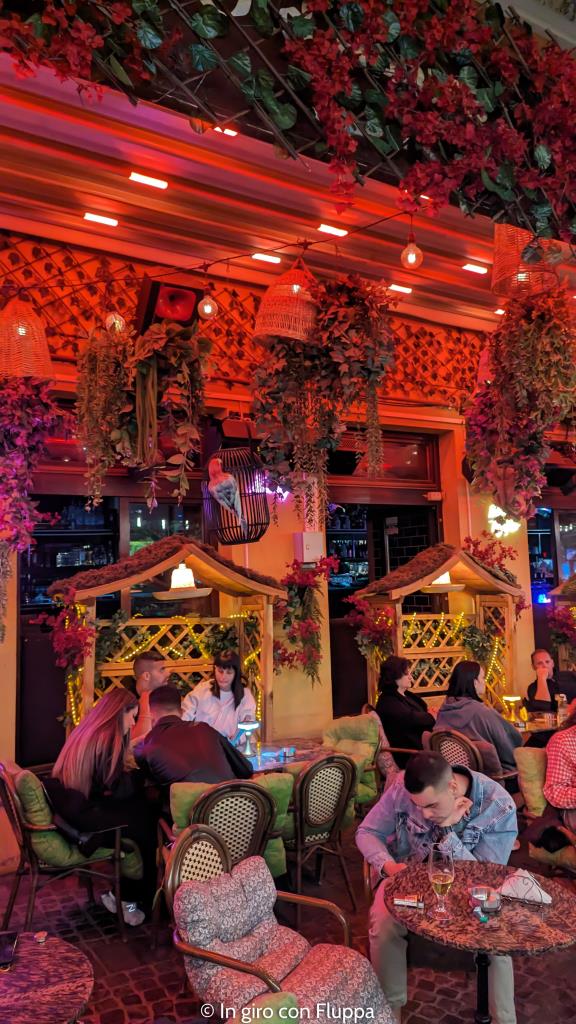
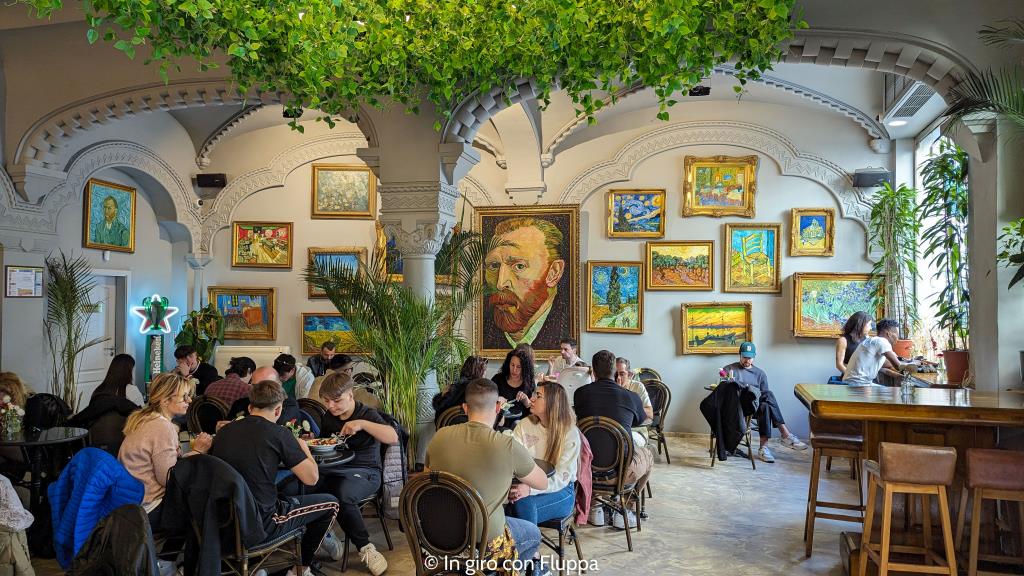
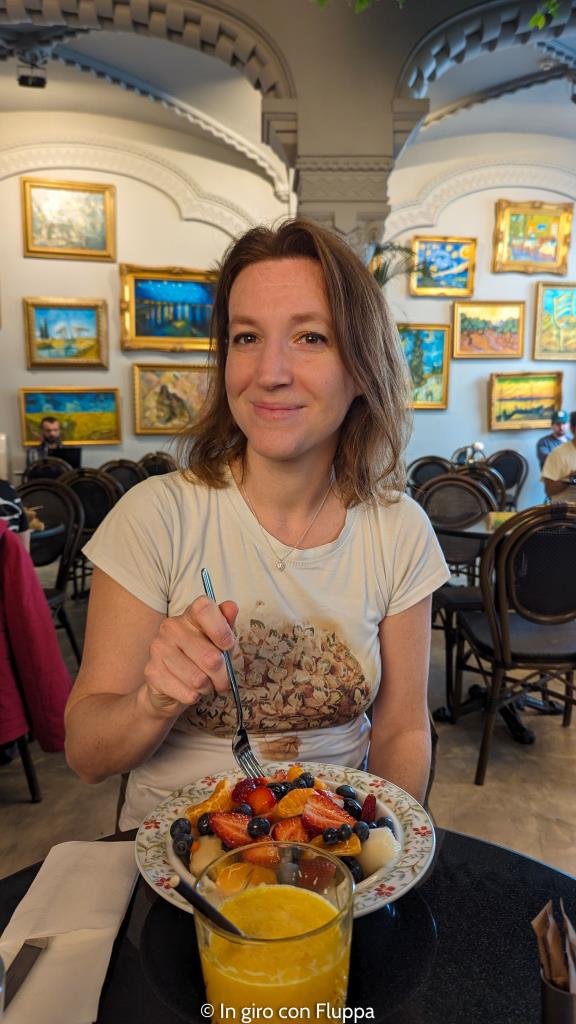
A place you really shouldn’t miss in the Lipscani area — whether for breakfast, brunch, lunch or dinner — is the Grand Café Van Gogh, which is visually striking and has a good menu.

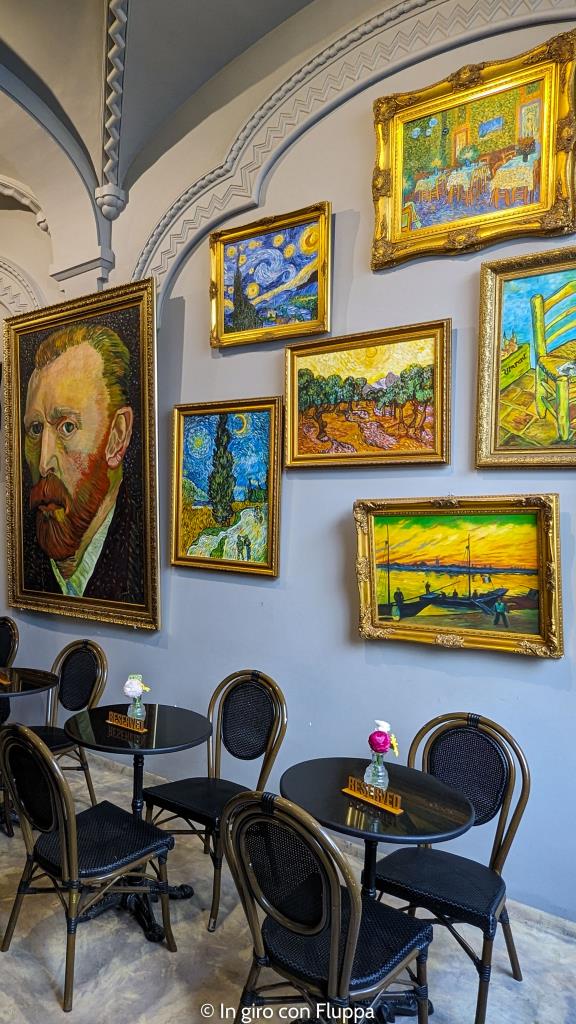
The main highlight of this café is its artistic, refined atmosphere, carefully designed by a creative interior designer who used the Dutch painter’s artworks as the core inspiration for the décor.

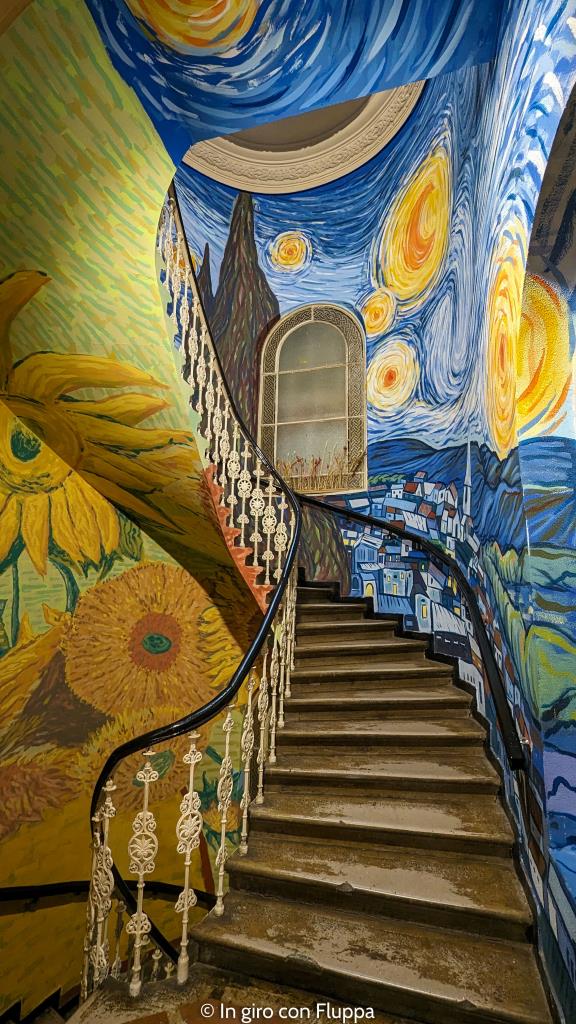
The venue has an outdoor terrace and equally decorated upstairs rooms, but the most beautiful area is the main ground-floor hall: spacious, filled with natural light from large windows, and featuring a stunning staircase painted with inspiration from The Starry Night and Sunflowers by Van Gogh.

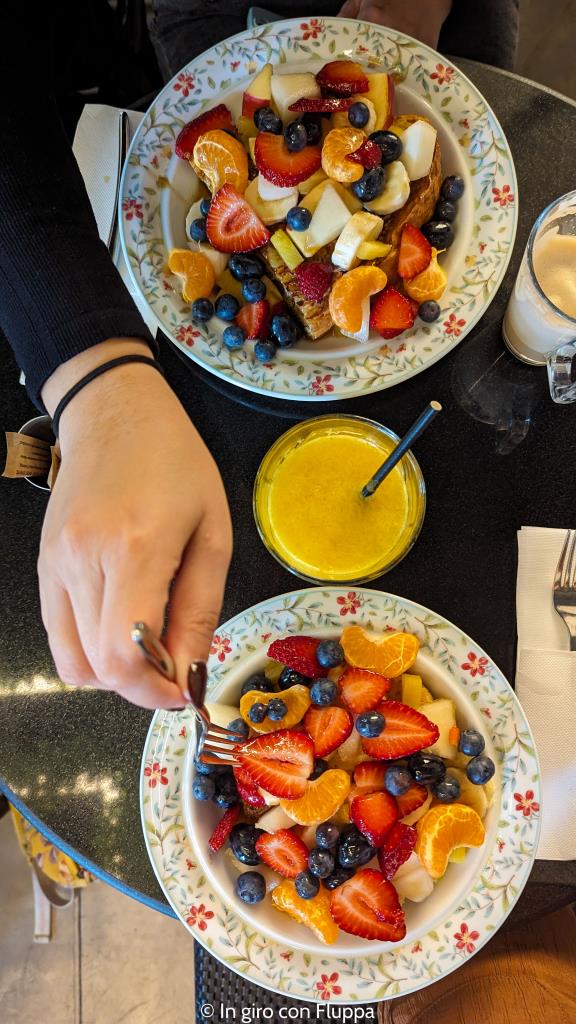
My friends and I visited the café for breakfast and had pancakes and French toast with fresh fruit, along with latte, cappuccino and fresh orange juice. The ingredients were fresh and the food was tasty, although prices are slightly above average due to the uniqueness of the place.

The Grand Café Van Gogh is very popular and gets busy from early morning, even on weekdays, so I recommend booking a table or going early in the morning (no later than 9:00).

And make sure your Instagram account is ready!

Opening hours: Sunday to Thursday from 8:00 to 23:30, Friday and Saturday from 8:00 to 01:00 (at night!).
Website: vangogh.ro

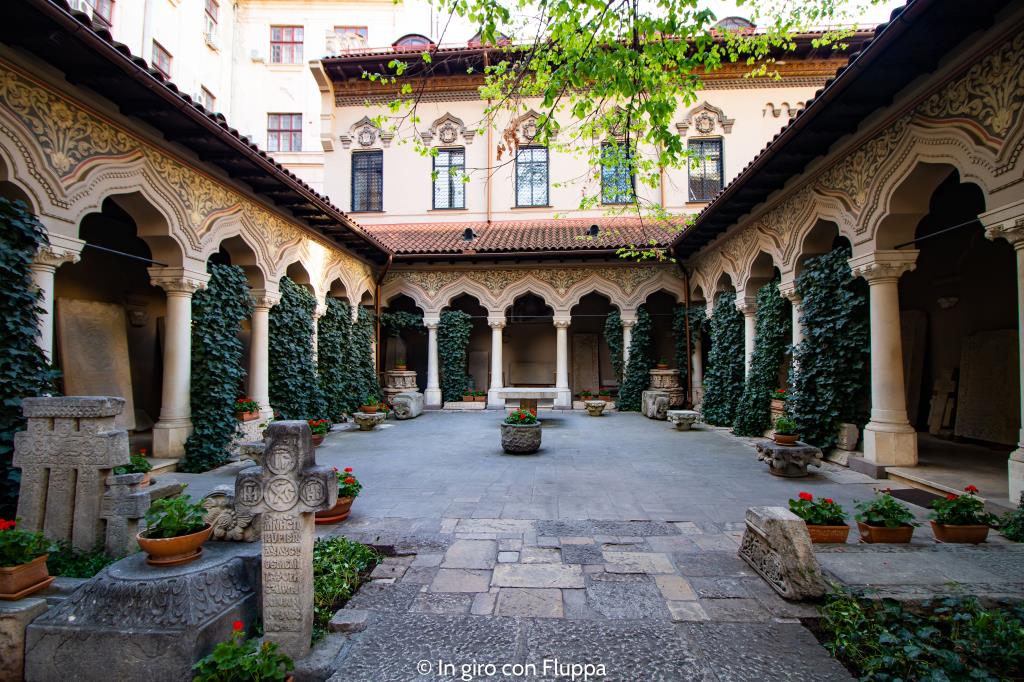
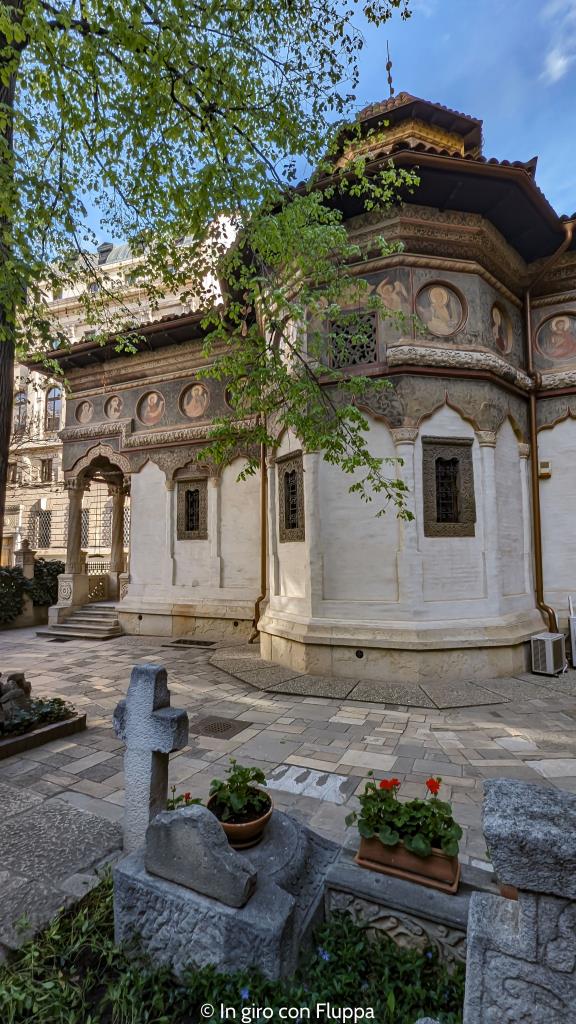
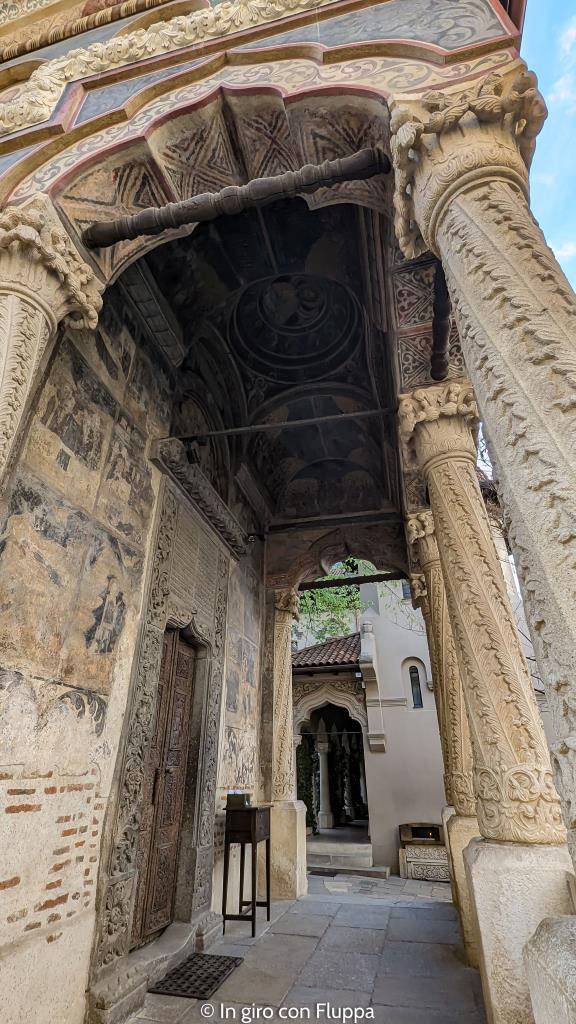
Stavropoleos Church

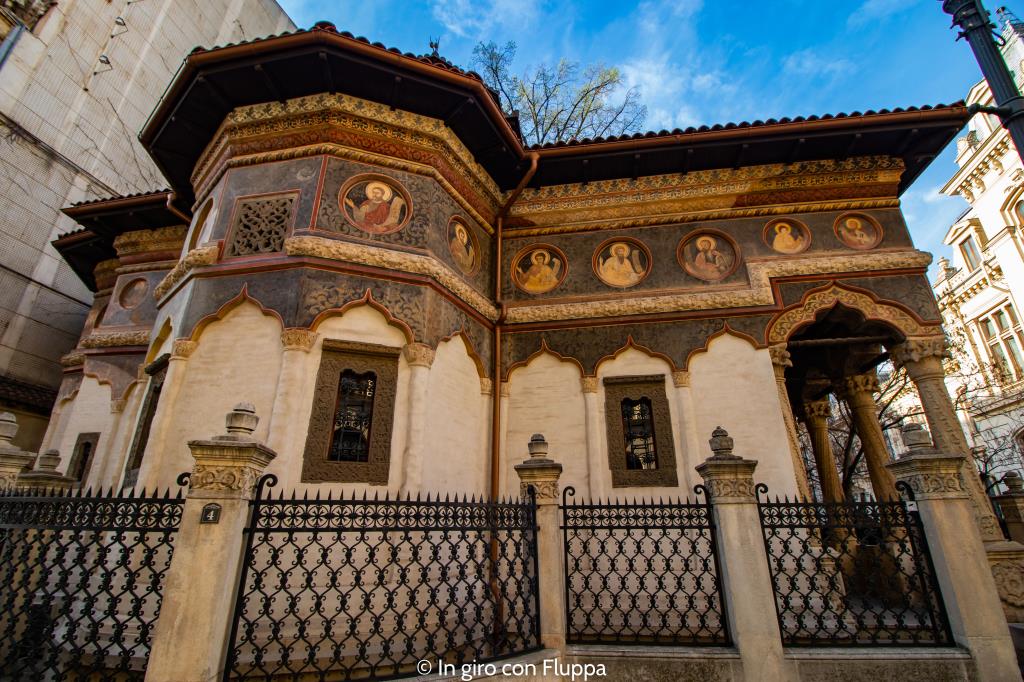
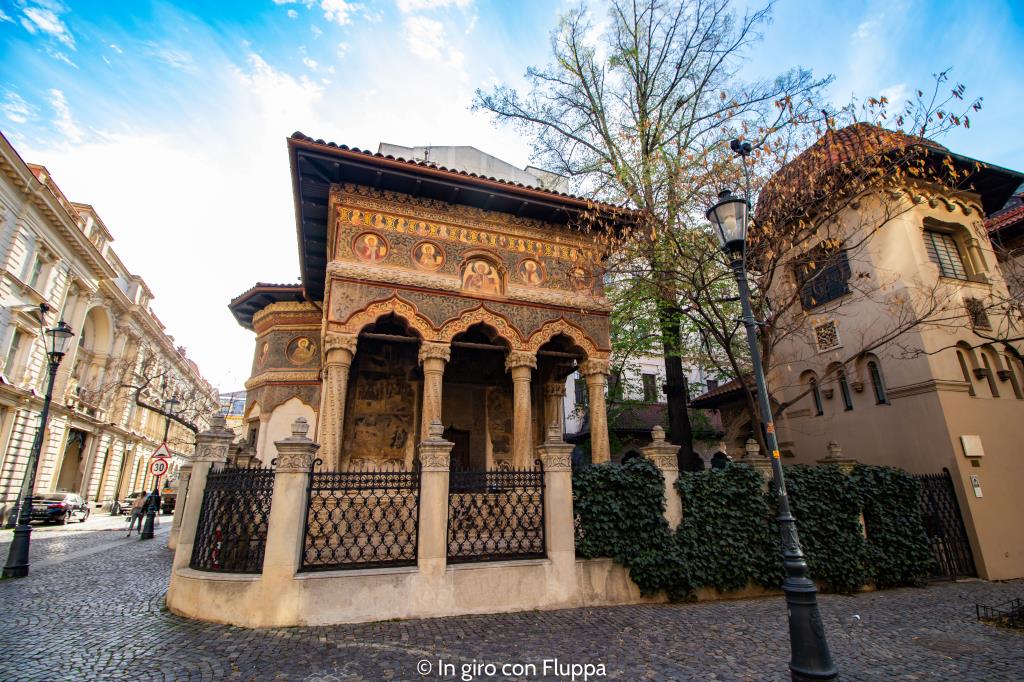
Very close to the Grand Café Van Gogh, you’ll find the small but beautiful Stavropoleos Church, known in Romanian as Biserica Mănăstirii Stavropoleos.

It is the church of a former Eastern Orthodox nunnery, dating back to 1724. The name Stavropoleos has Greek roots, like the monk who founded it, and means “The City of the Cross”. Inside the monastery complex, the monk built both the church and a monastery, which supported itself financially through its own income — a fairly common arrangement at the time.

Over the centuries, the church was damaged by a series of earthquakes, which led to the collapse of the dome, while the inn and the rest of the monastery were demolished at the end of the 19th century.

Not everything was lost, though: the dome paintings were restored at the beginning of the 20th century, and the church survived the destruction of the communist era under Ceaușescu.

Today, only the church, the cloister, and a 20th-century building remain from the original monastery. This now houses a library with Romania’s largest collection of Byzantine music books, a conference hall, and a collection of ancient icons and religious objects.

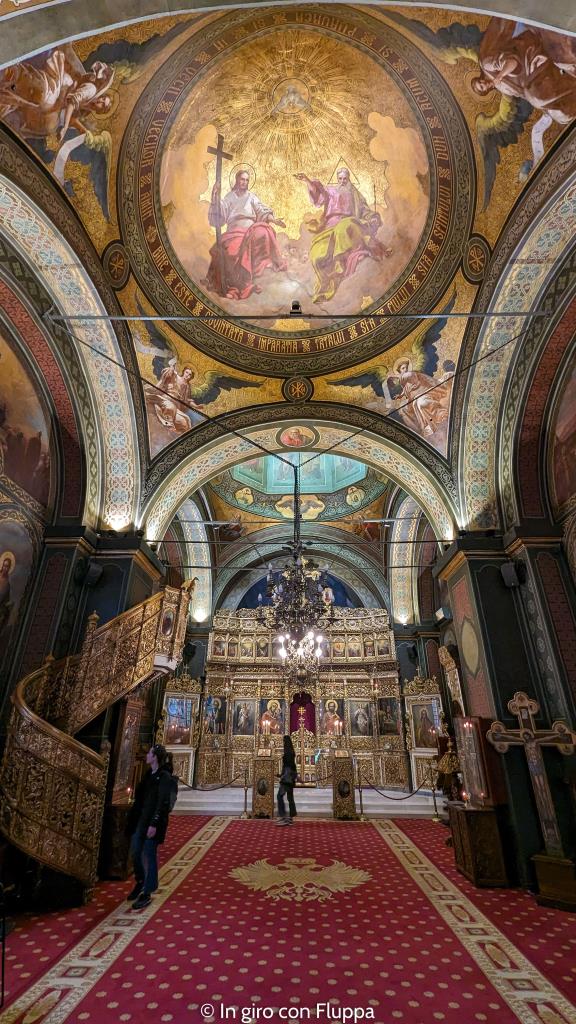
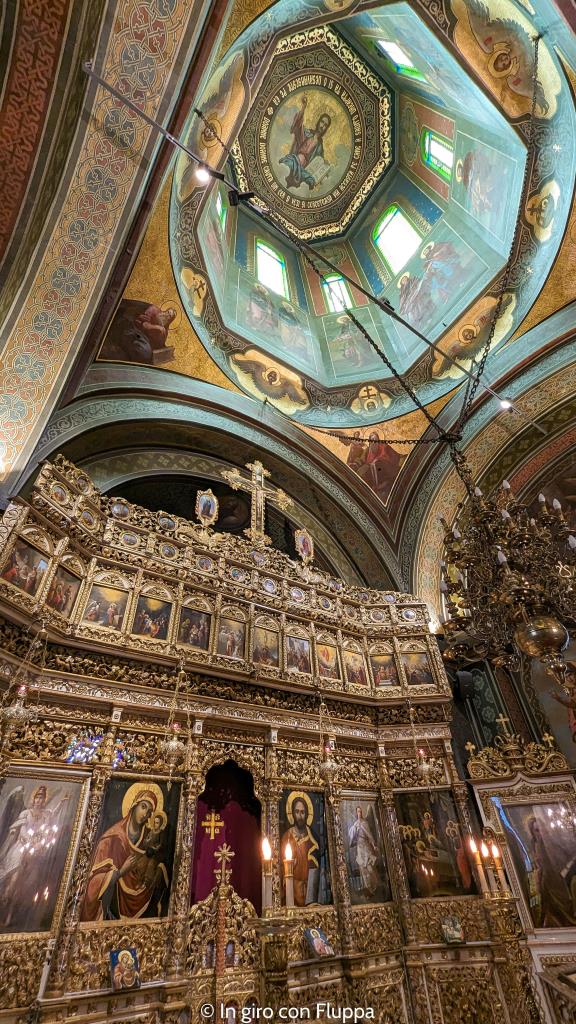
The church exterior is decorated with colourful frescoes and carved columns. The cloister has a marble arcade with five arches, while the interior is fully covered with original frescoes from the time it was built.

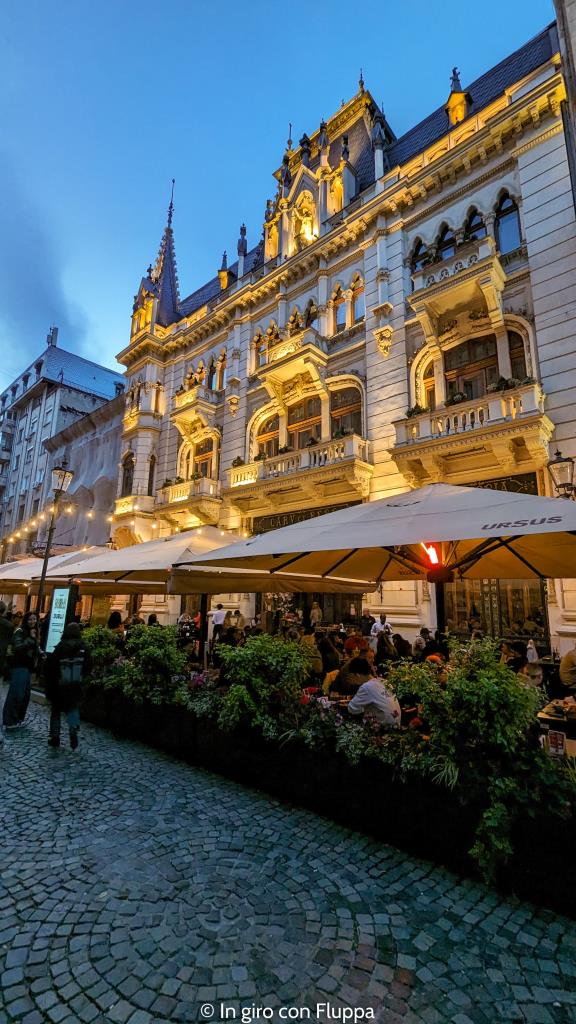
Caru' cu bere

Just a short walk (literally) from Stavropoleos Monastery, you’ll find a spectacular restaurant.

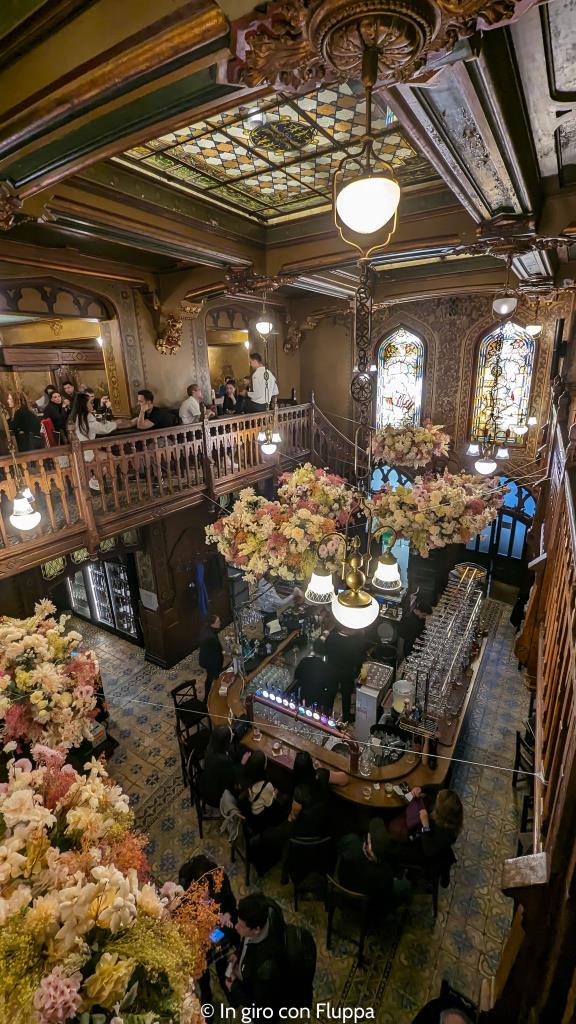
It would be fair to say that Caru’ cu Bere is a must-visit restaurant in Bucharest, but that would still feel like an understatement. This is not just a traditional Romanian restaurant, but a building with almost 150 years of history, officially listed as a historic monument by the Romanian Ministry of Culture.

A symbol of the Old Town and of the city itself, the story of the restaurant began in 1879, when a brewery called La Carul cu Bere (“At the Beer Wagon”) opened on Calea Victoriei, run by the Transylvanian Ion Căbășanu together with his nephews, the Mircea brothers. Eighteen years later, in 1897, Nicolae Mircea bought the premises at 5 Stravropoleos Street, where the brewery that we know today as Caru’ cu Bere would be established.

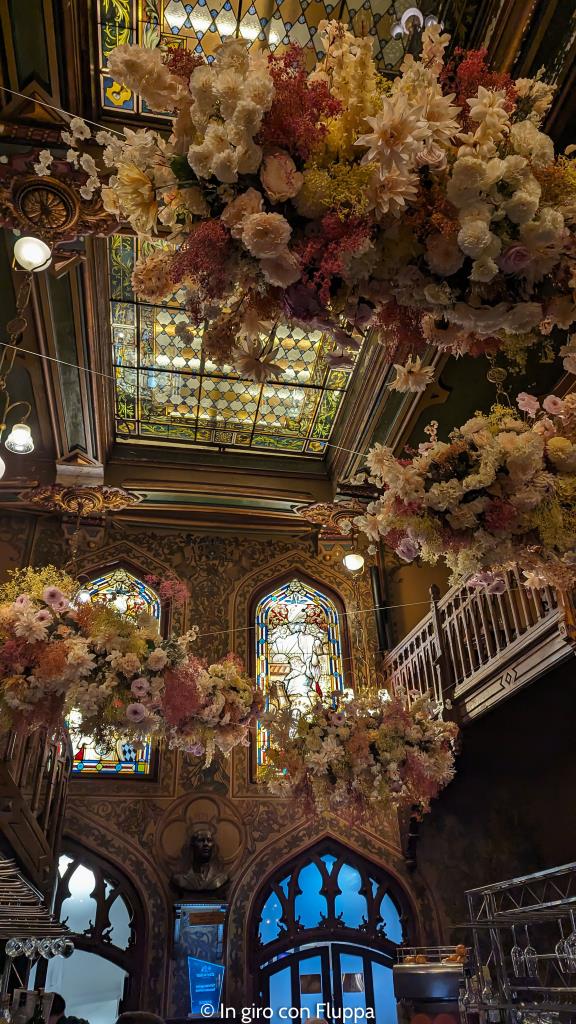
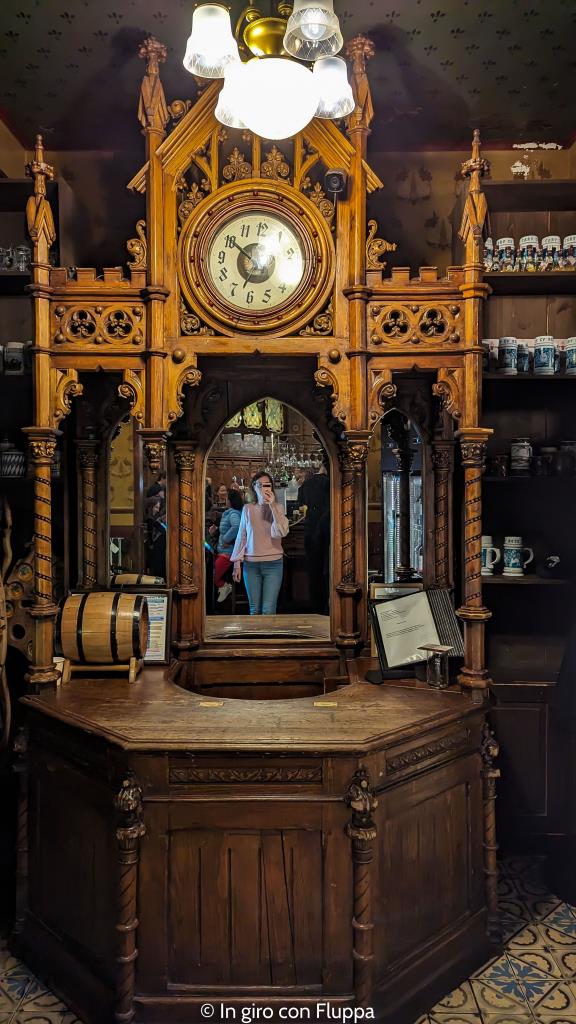
The exterior façade is decorated with beautiful Gothic-style details, topped by a central recess where the emblematic statue of a landlord stands. The interiors are just as impressive: the ground floor, with its vaulted neo-Gothic style, is richly decorated with paintings, stained glass, mosaics and carved wooden panels.

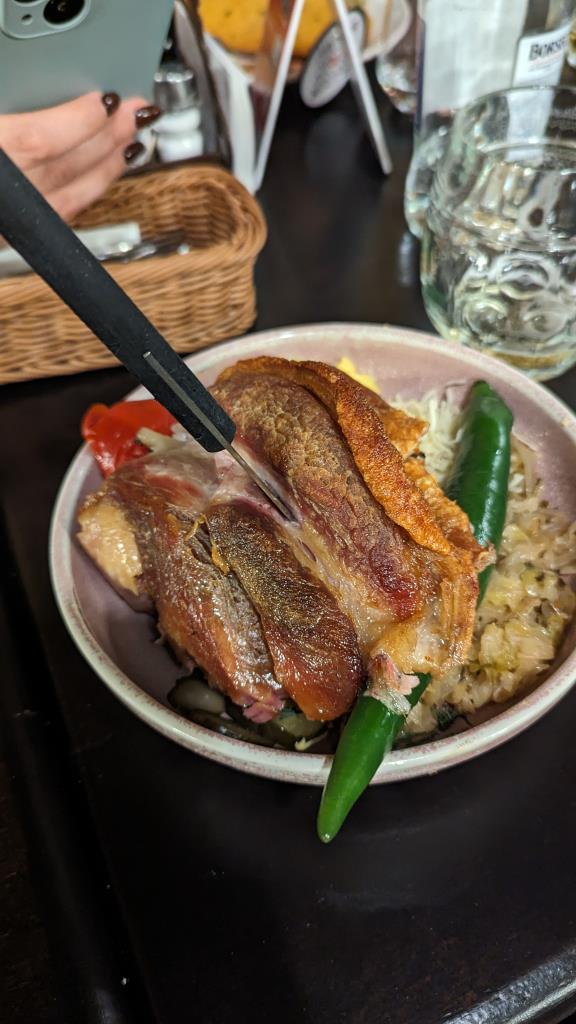
At Caru’ cu Bere you can try traditional Romanian dishes, such as roast pork knuckle or grilled minced meat rolls, all washed down with plenty of house beer.

When I said Caru’ cu Bere is spectacular, I meant it quite literally: every evening between 19:00 and 22:00 there are live dance performances, from ballroom and folk dances to traditional Romanian shows. If you visit for lunch, you may instead catch piano concerts and string instrument performances. The restaurant’s official website also has a programme section with exact performance times.

Note: this place is extremely popular, so make sure to book in advance.

Opening hours: every day from 09:00 to midnight
Website: carucubere.ro

Pasajul Macca-Villacrosse

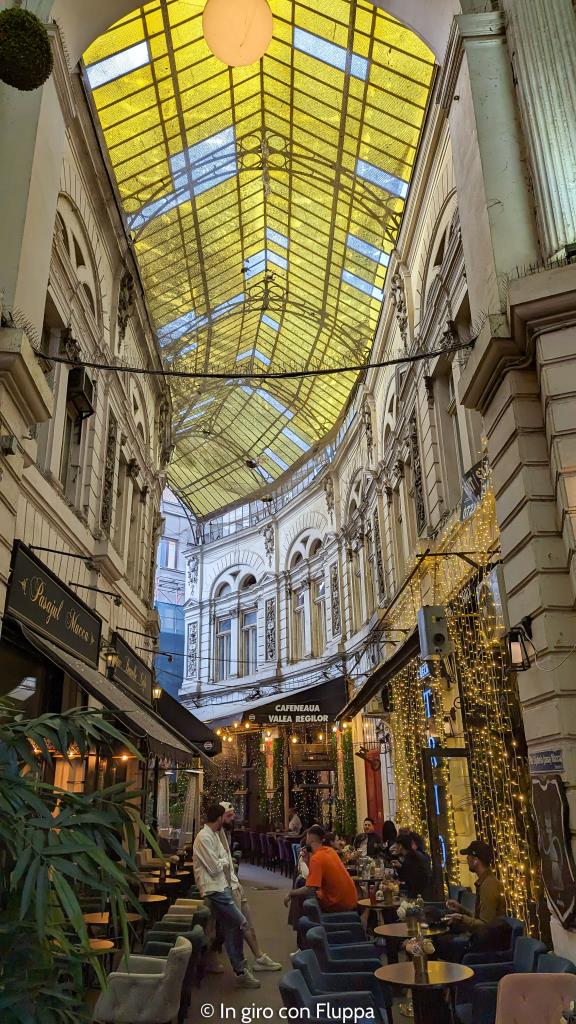
Pasajul Macca-Villacrosse is a covered arcade with colourful glass ceilings that links Calea Victoriei with Eugeniu Carada Street, which in turn opens onto Lipscani Street.

At the end of the 19th century, most financial institutions were based in central Bucharest. To ease traffic, the city council decided to build a pedestrian shortcut between the Old Town and the main boulevard, Calea Victoriei.

In this area there were originally three buildings. Two owners, named Macca and Villacrosse, agreed to sell their inns and shops to make way for the passage. The third refused to sell his hotel, which stood right in the middle of the planned route. As a result, the city built the passage in two wings that wrapped around the hotel, and the two streets were named after the former owners: Macca and Villacrosse.

The arcade is covered by a stained-glass roof, which lets in natural light while protecting from rain, and it is home to several venues such as bars, restaurants and bistros.

CEC Palace

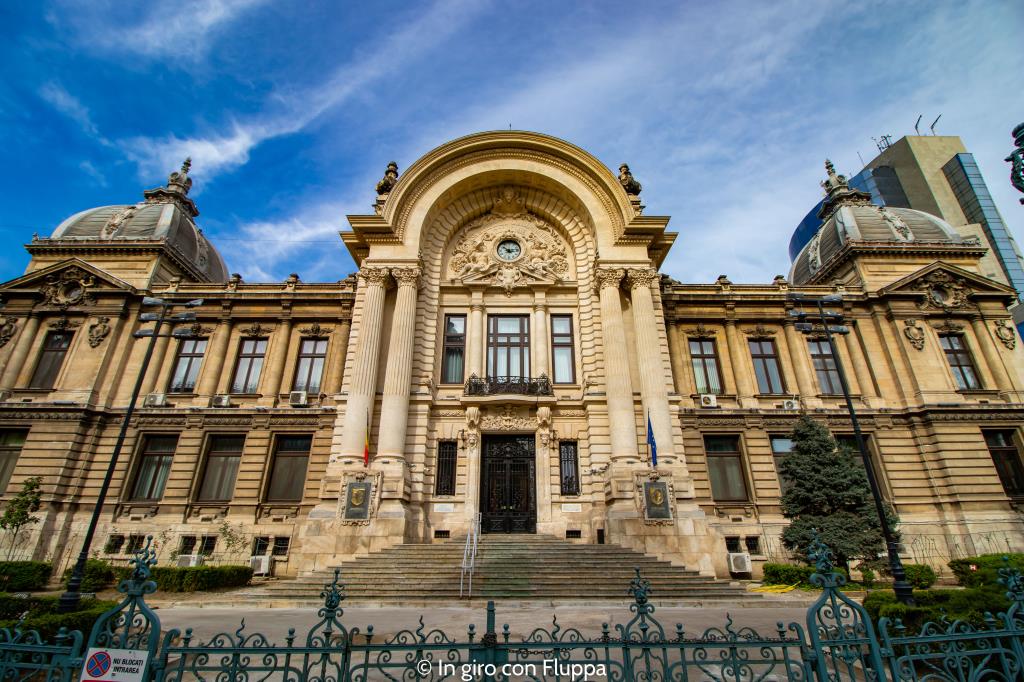
The CEC Palace (Romanian: Palatul CEC), built between 1897 and 1900 and located on Calea Victoriei opposite the National Museum of Romanian History, is the headquarters of CEC Bank.

The building was constructed as the new headquarters of Romania’s oldest savings institution, the public bank Casa de Depuneri, Consemnațiuni și Economie, later known as C.E.C. (Casa de Economii și Consemnațiuni).

Designed in an eclectic style that mixes different architectural elements, the palace features a monumental arched entrance supported by two pairs of columns. Its four corners are decorated with pediments, coats of arms and Renaissance-style domes.

The building is mainly made from local materials, including solid stone and marble from Dobruja. At the top, you can see Mercury, the god of commerce, and Demeter, the goddess of fertility and wealth, sitting opposite each other with a clock between them.

Unfortunately, the interior of the palace cannot be visited, as it is closed to the public.

The CEC Palace is said to be one of the most resilient buildings in Bucharest. During the 1977 earthquake, only the glass dome was damaged, while nearby buildings collapsed. It also survived the Soviet bombings of 1941 and the Anglo-American raids of 1944.

Cărturești Carusel

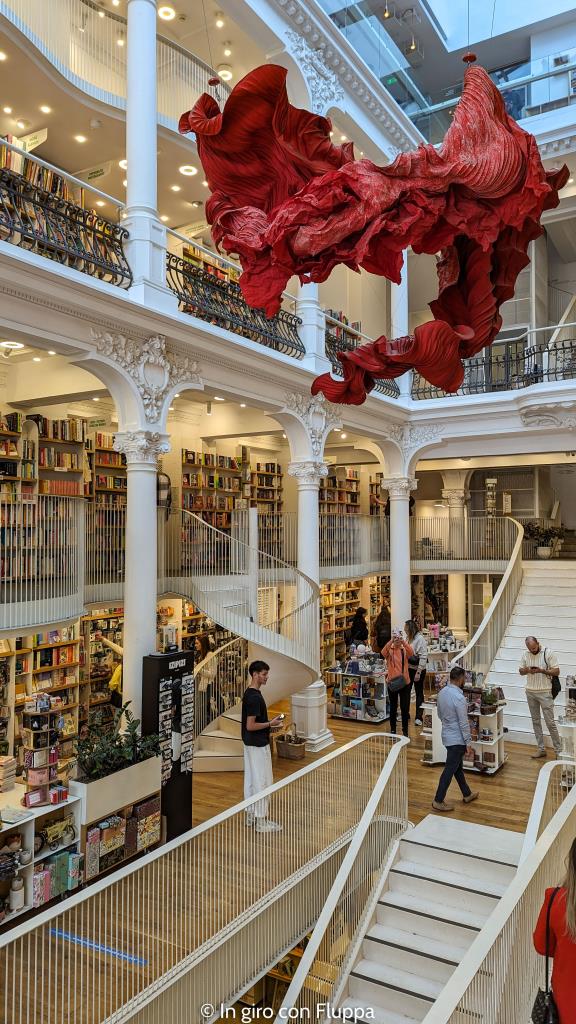
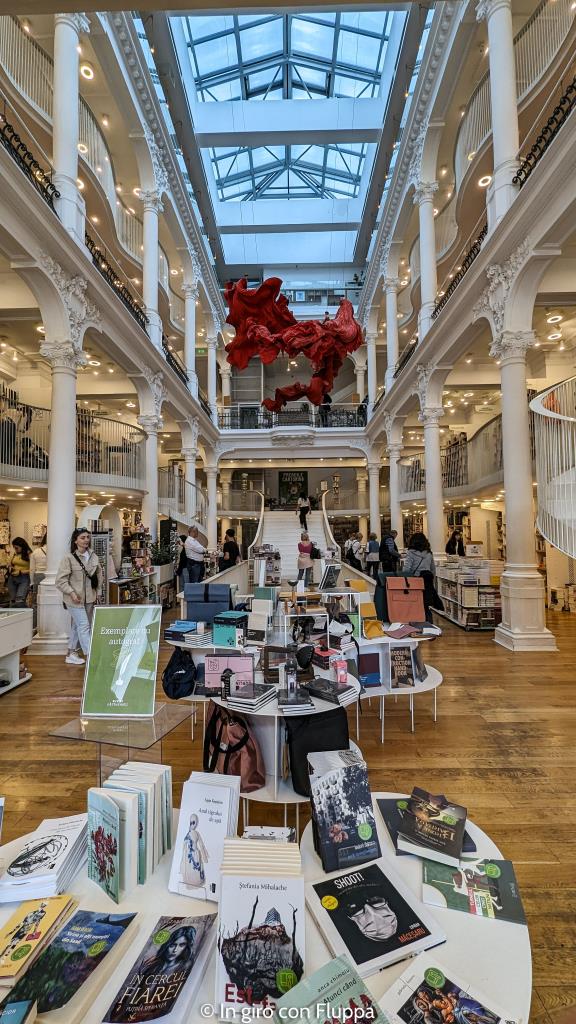
Can a simple bookshop become a destination for hundreds of visitors a day thanks to… Instagram? Of course it can!

But while social media may have spread its images far and wide, the beauty of Cărturești Carusel is entirely down to its owners.

The building that now houses the bookshop, located on Lipscani Street, was built in the early 1900s by the Chrissoveloni banking family. In its early years, it served as the headquarters of the Chrissoveloni Bank and later became a department store.

Between the late 1990s and early 2000s, the building fell into disrepair, until 2015, when a five-year restoration, reinforcement and conversion project was completed.

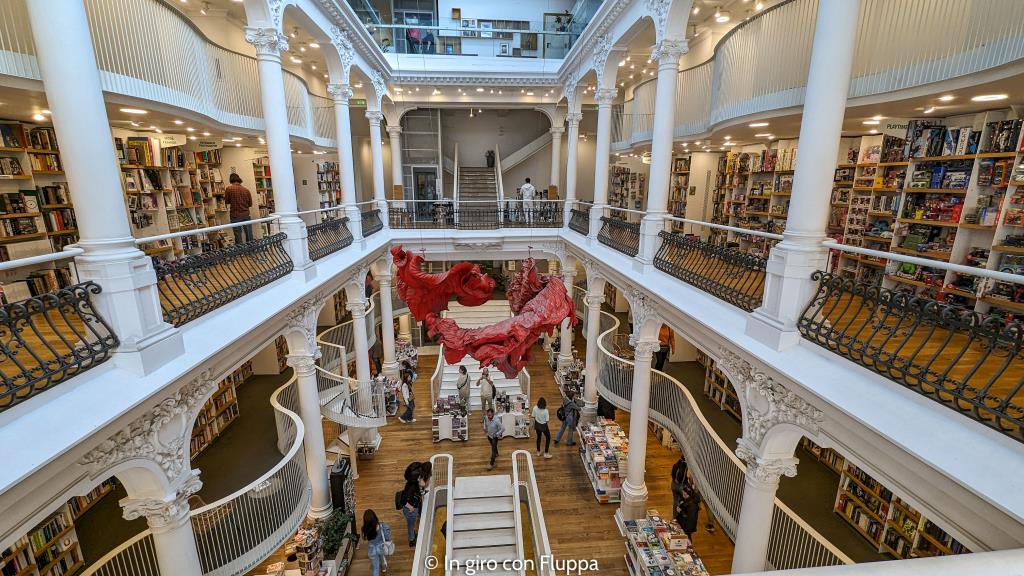
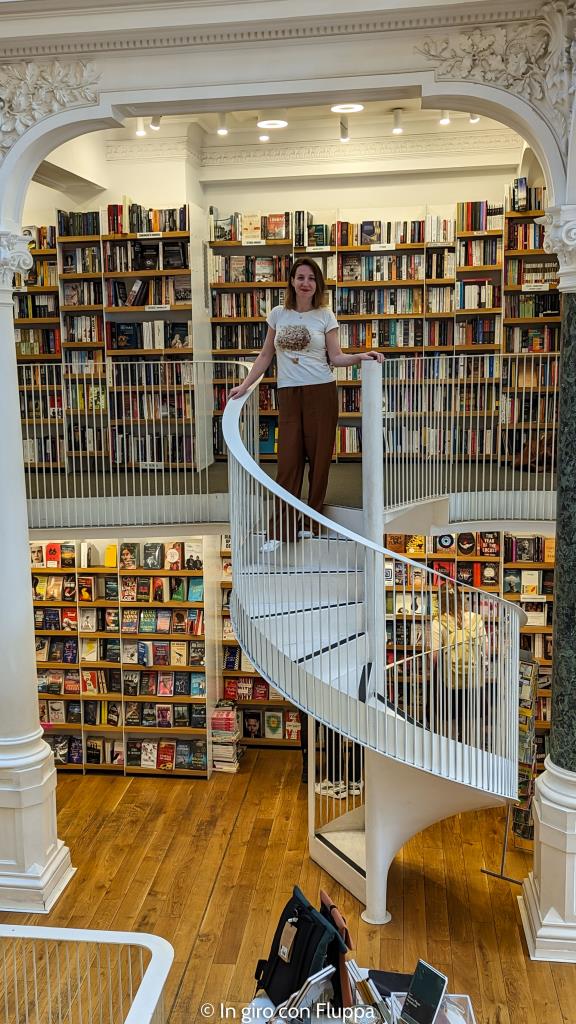
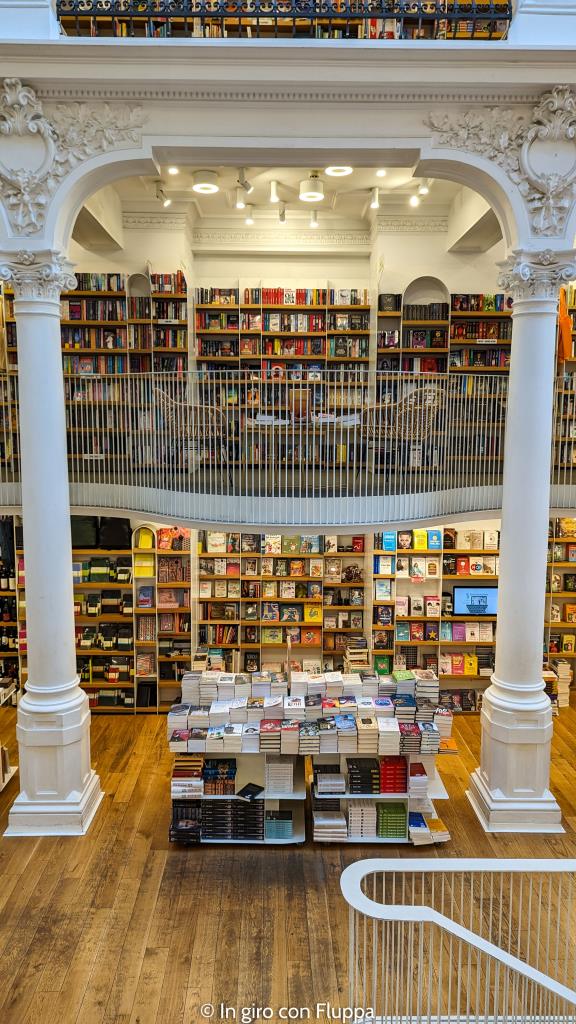
Today, the bookshop spans several floors decorated with white columns, stucco details and spiral staircases, topped with a glass roof. On the top floor there is a small bistro where book lovers can take a break and grab something to eat or drink.

Most of the books in Cărturești Carusel are in Romanian, but there is also a selection in English. Alongside books, the shop also sells stationery, vinyl records and a small section of toys.

Opening hours: Mon & Wed 10:00–22:00, Thu & Sun 10:00–22:30, Fri & Sat 10:00–00:00
Website: carturesticarusel.ro

Palace of the Parliament

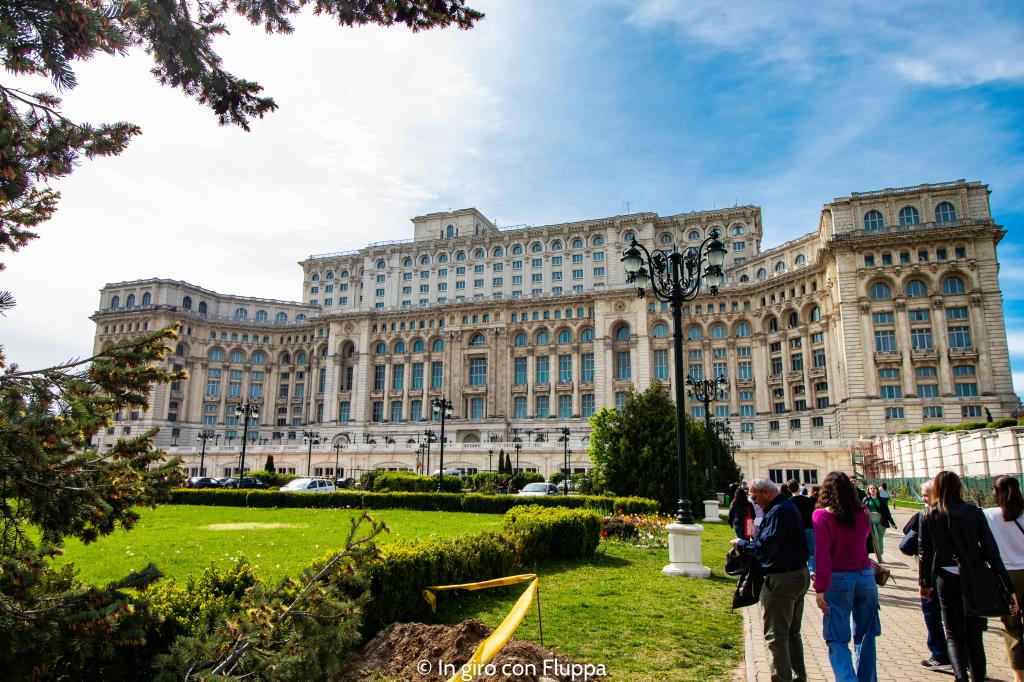
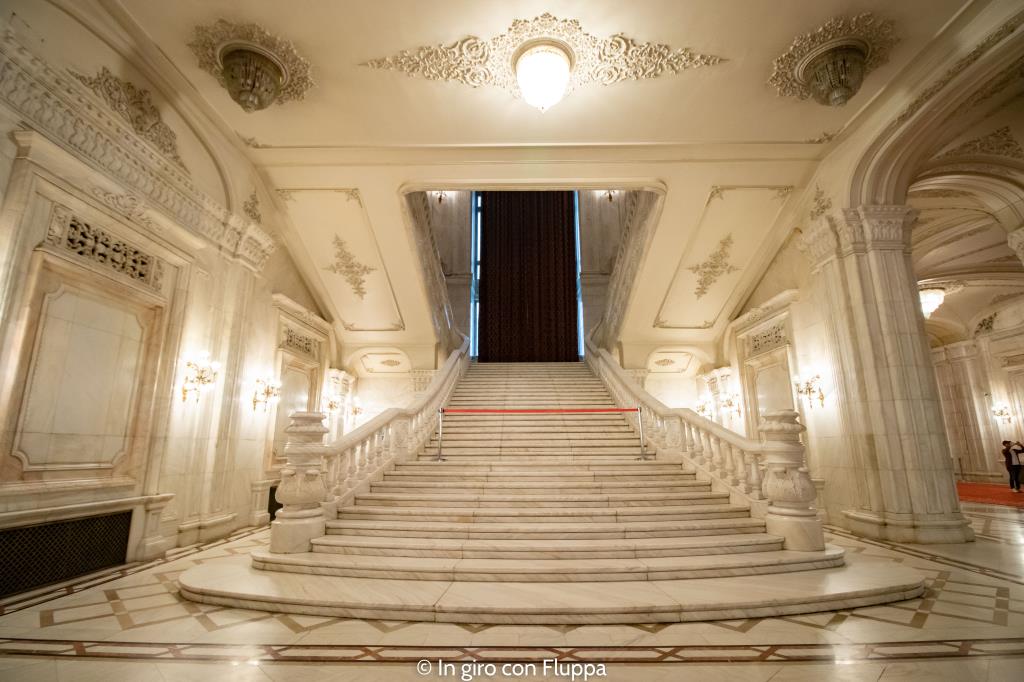
According to the Guinness World Records, the Palace of the Parliament in Bucharest is the largest administrative building in the world used for a socialist government, as well as the heaviest and most expensive building in the world.

Also known as the “House of the People” during Ceaușescu’s regime, the building is, in fact, a symbol of the dictator’s megalomania and of Romania’s communist past.

Shortly after the 1977 earthquake, the Romanian communist leader Nicolae Ceaușescu launched a project to build a new political and administrative centre in what was considered the safest area of Bucharest for monumental construction: the Uranus Hill district. To make space for it, around 5% of Bucharest was demolished, an area roughly the size of Venice. Twenty churches were destroyed, eight moved, 10,000 houses were torn down, and over 57,000 families were forced to relocate. The Brâncovenesc Hospital, the world’s first forensic medicine institute, was also demolished.

The Palace of the Parliament was designed by 25-year-old architect Anca Petrescu, who worked with a team of over 500 people. It took 10 years to build and used 700,000 tonnes of steel and bronze, 1 million cubic metres of marble, 3,500 tonnes of crystal, and 900,000 cubic metres of wood. More than 20,000 workers took part, working in shifts around the clock.

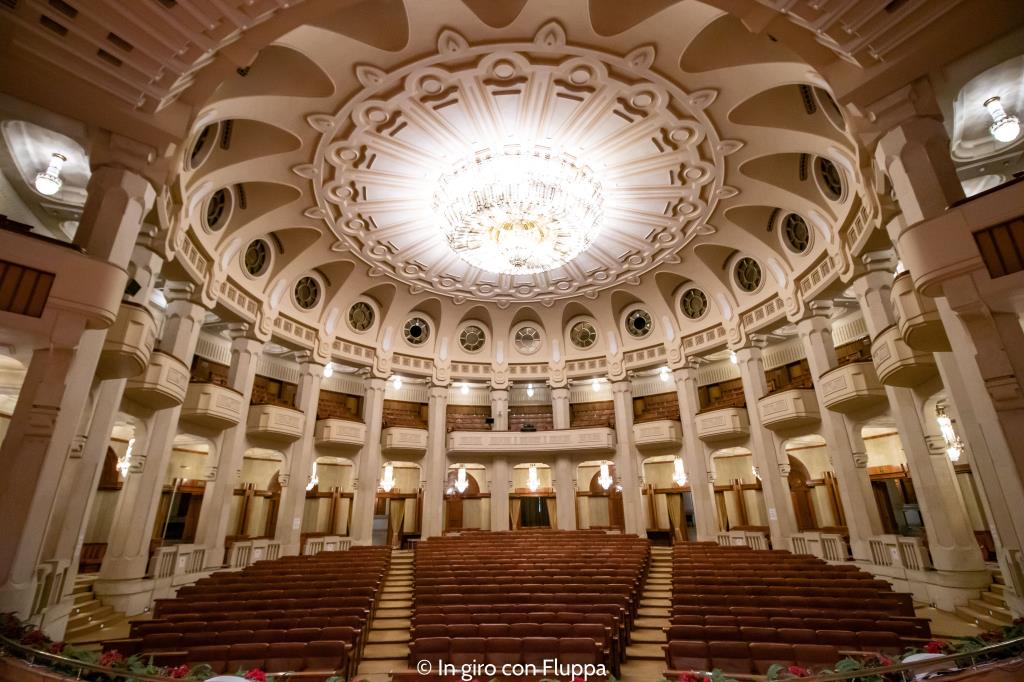
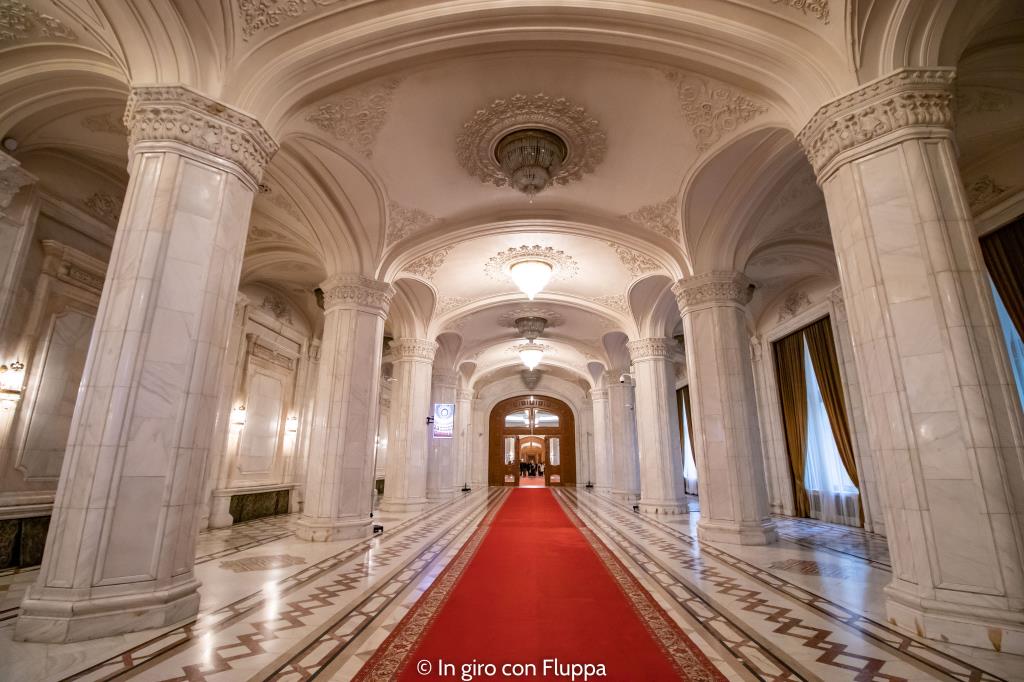
The massive neoclassical structure contains around 1,100 rooms, including offices, ballrooms, restaurants, libraries, underground car parks, a large concert hall and a swimming pool.

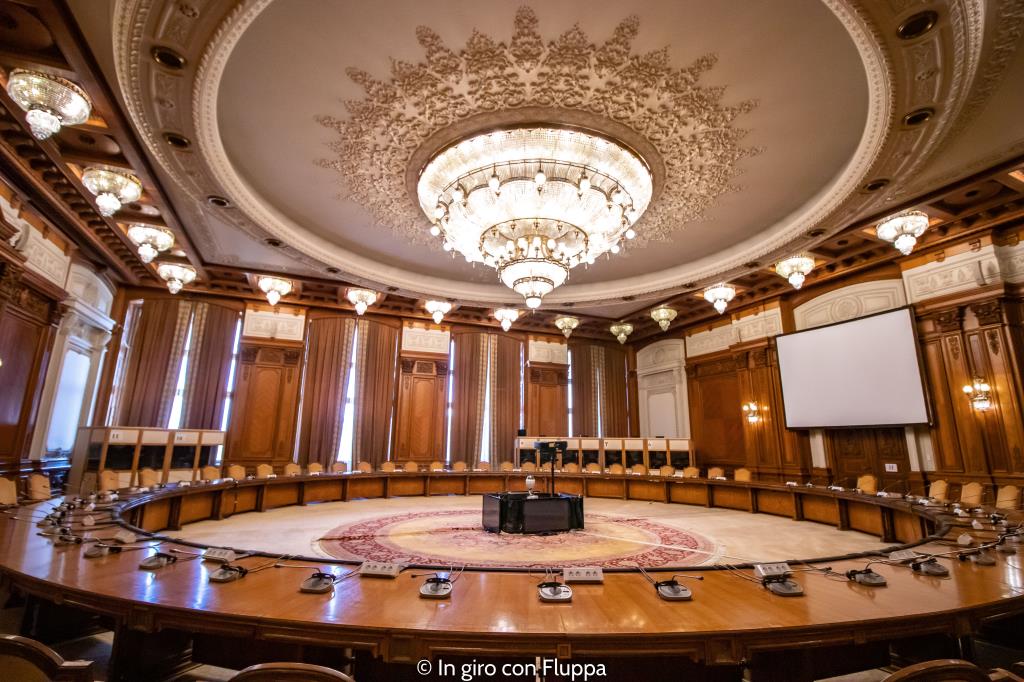
Today, the Palace houses the two chambers of the Romanian Parliament and is one of the most visited attractions in Bucharest. With its 340,000 m², it is the second largest administrative building in the world after the Pentagon.

Visits are only allowed with official parliamentary guides, and — crucially — only after a passport check and airport-style security screening.

The tour itself lasts about 45 minutes, but you should allow around an hour and a half in total for all the security checks.

Here you can buy
tickets for the guided tour of the Palace of the Parliament in Bucharest

Or, using this banner, you can check available dates.

Powered by GetYourGuide

Make sure you bring your passport or ID card with you, otherwise you won’t be allowed in — even if you’ve already bought your ticket!

Opening hours: every day from 09:00 to 17:00
Website:cic.cdep.ro

Pasajul Victoria

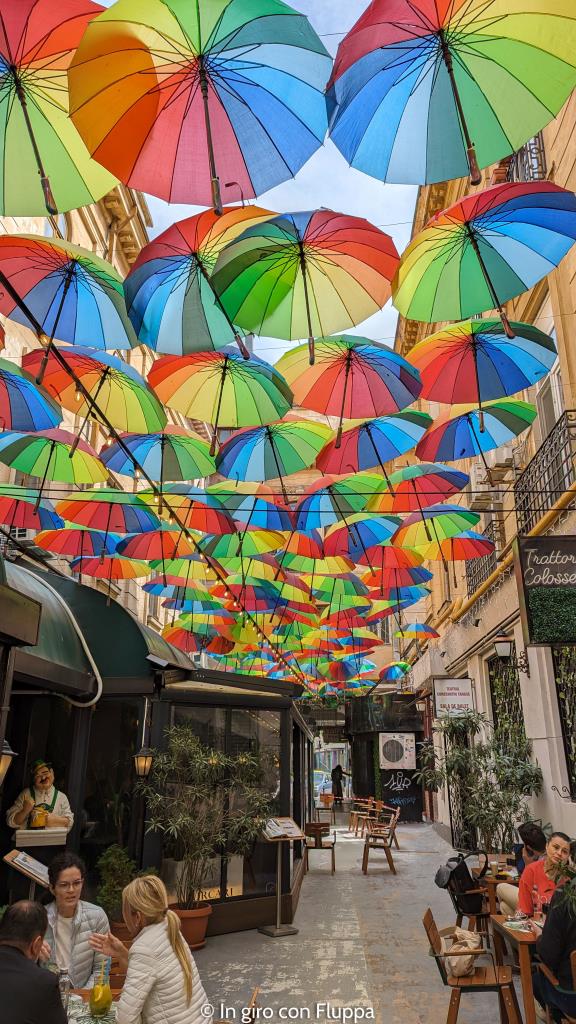
Take a narrow little street, add a handful of colourful umbrellas, and voilà! Instagram will do the rest.

Victoria Passage (Pasajul Victoria) doesn’t have much to offer apart from a couple of bars and restaurants with outdoor tables. Even so, you’ll always find people queuing up to get the perfect shot under the colourful trail of umbrellas!

Pasajul Englez

The parallel passage to Pasajul Victoria is very different from the previous one, but it has an interesting history.

At the end of the 19th century, Grigore Eliade, the son of a wealthy innkeeper, bought a building located here and opened a hotel that soon became known as the “English Hotel”, due to the furniture and décor imported from London.

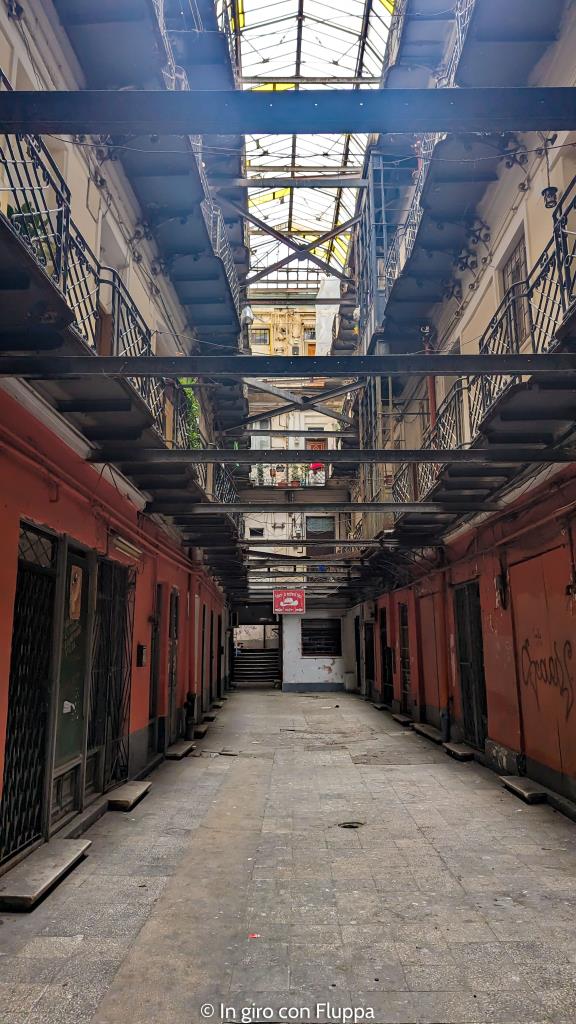
During renovations, a passage was built connecting Calea Victoriei to Academiei Street. The passage is tall, narrow and covered with a glass roof, very similar to other passages that were fashionable in Western European capitals at the time. Most of the hotel rooms were located along the passage, with metal balconies overlooking it.

The building only remained a hotel for a few years. The rooms were too small compared to newer hotels, and the building was later turned into a luxury brothel. The upper-floor balconies were used by women to display themselves to passing clients. The passage also allowed more discreet access for customers who preferred not to be seen. The brothel operated until 1947, when it was closed by the communist authorities, who banned prostitution.

Today, Pasajul Englez is rather neglected: the metal balconies are rusty, and the upper floors of the building are now used as social housing.

National Museum of Romanian Art and European Art Gallery

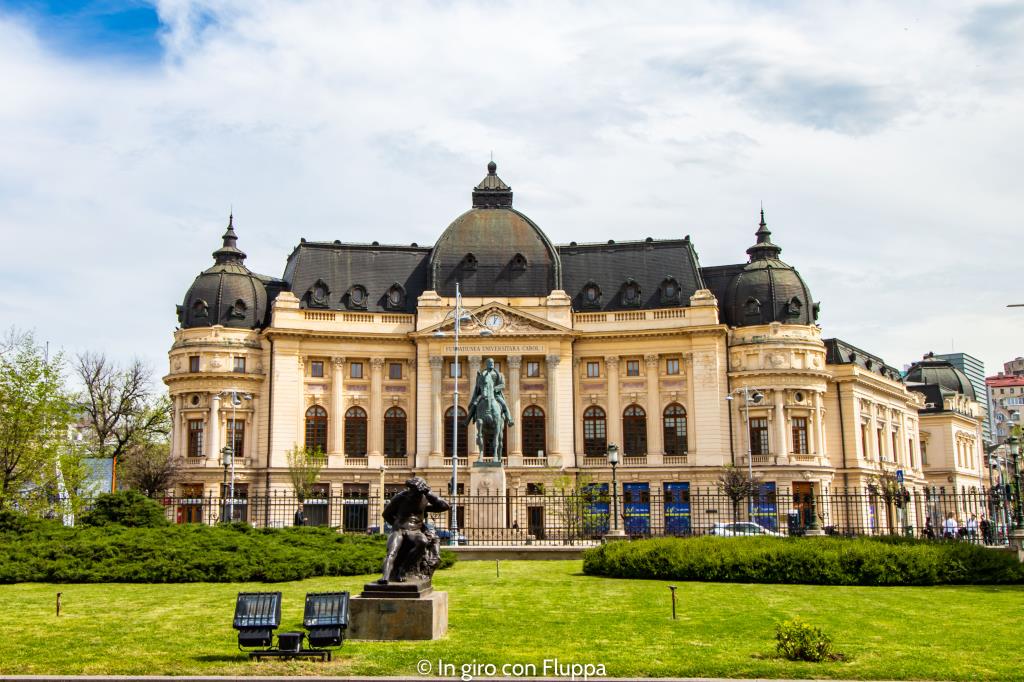
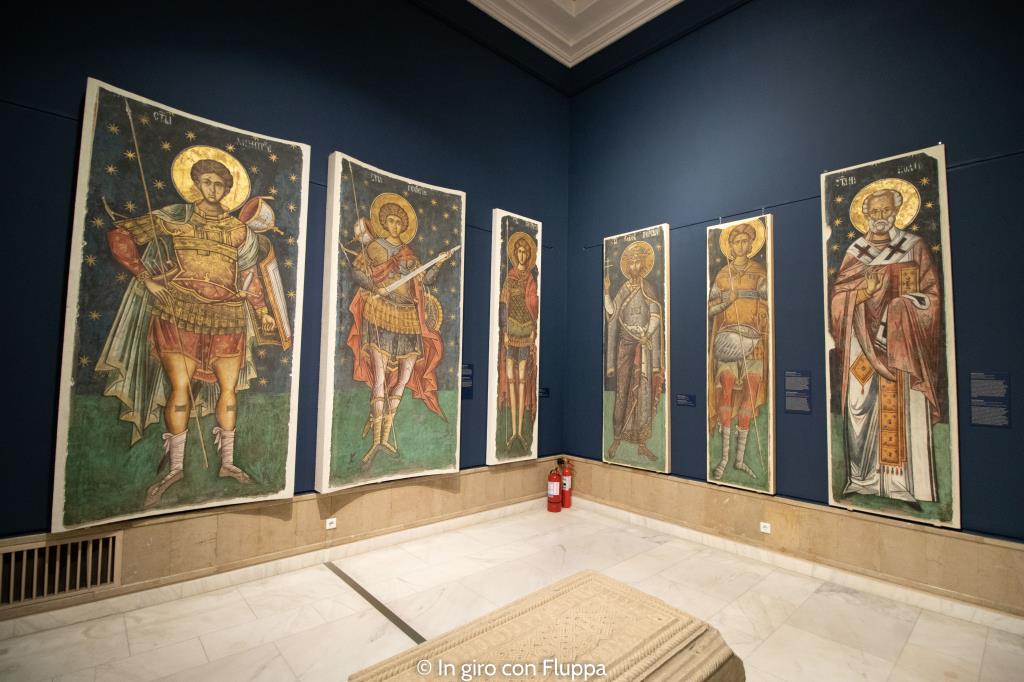
In the building that once served as the Royal Palace of Bucharest, opposite the Central University Library, you’ll find the National Museum of Romanian Art and the European Art Gallery.

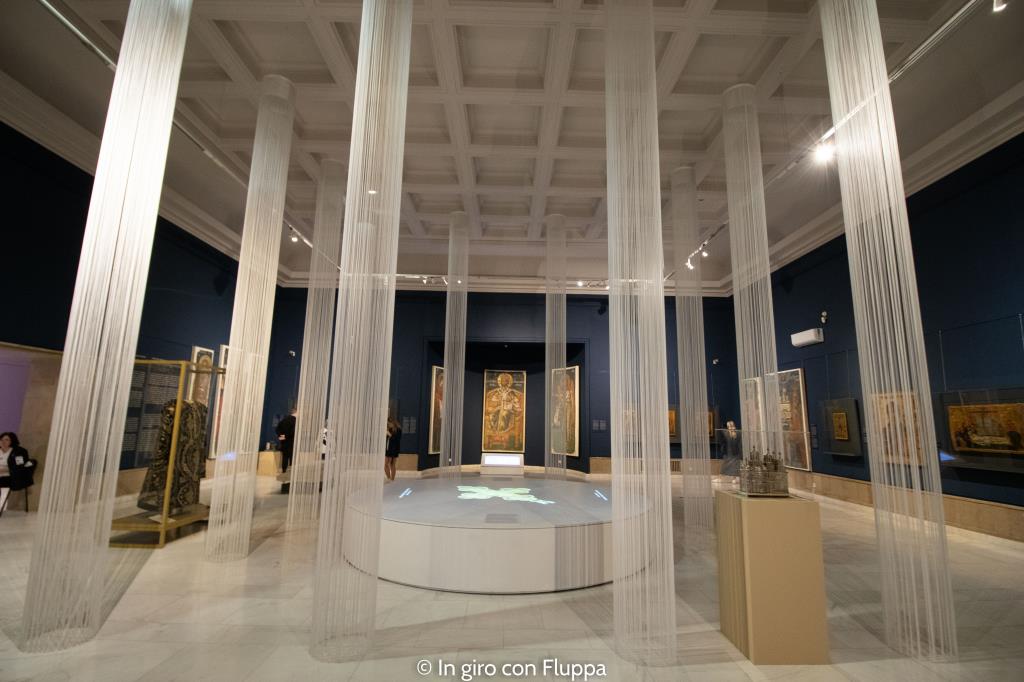
The National Museum of Romanian Art is dedicated to Romanian art, from the Middle Ages to the modern era, featuring paintings, sculptures and valuable monastery treasures that survived the destruction of the communist period.

In the European Art Gallery, you can find works by international artists such as Tintoretto, Rembrandt, Monet and Jan van Eyck.

The museum and gallery are fairly large and have two separate entrances, so you should allow around two hours to visit both.

Price: tickets range from 12 to 24 lei depending on which galleries you want to visit. Entry is free on the first Wednesday of the month.
Opening hours: Wednesday to Friday 10:00–18:00, Saturday and Sunday 11:00–19:00, closed on Monday and Tuesday.
Website for info, prices and updated opening times: mnar.ro
Nicolae Golescu district

The Nicolae Golescu District, located behind the Romanian Athenaeum, is a quiet residential area that is well worth exploring for the beauty of its buildings.

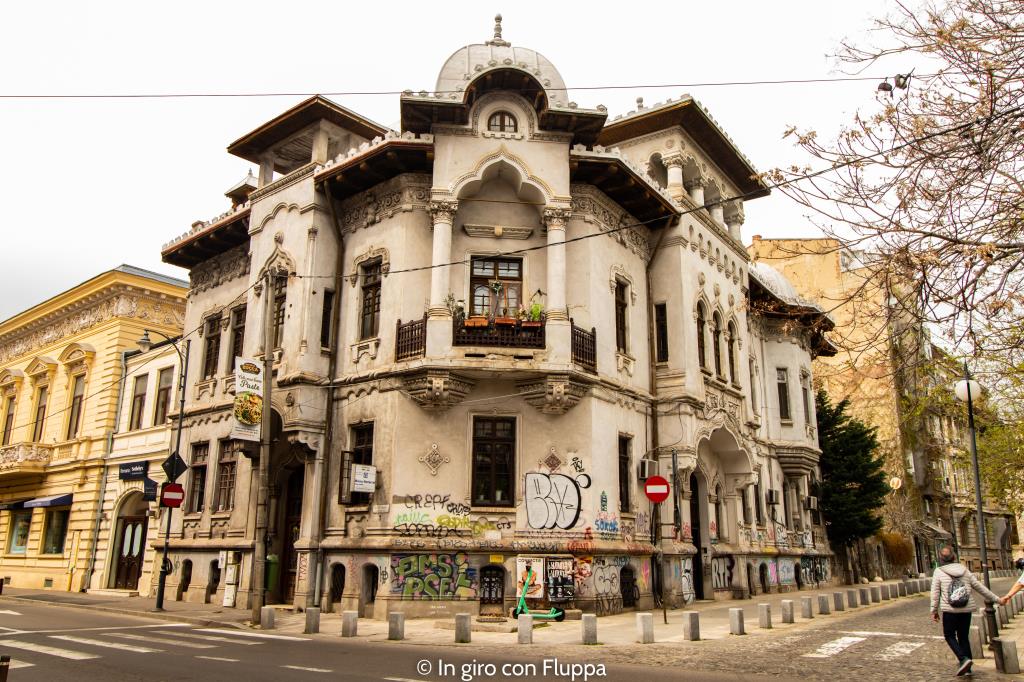
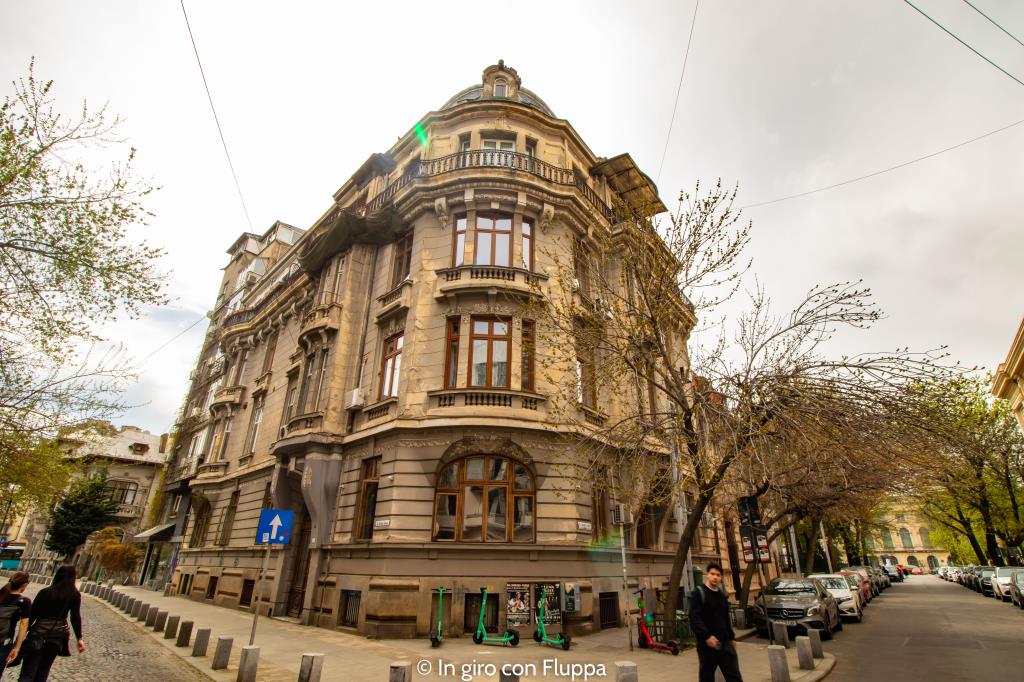
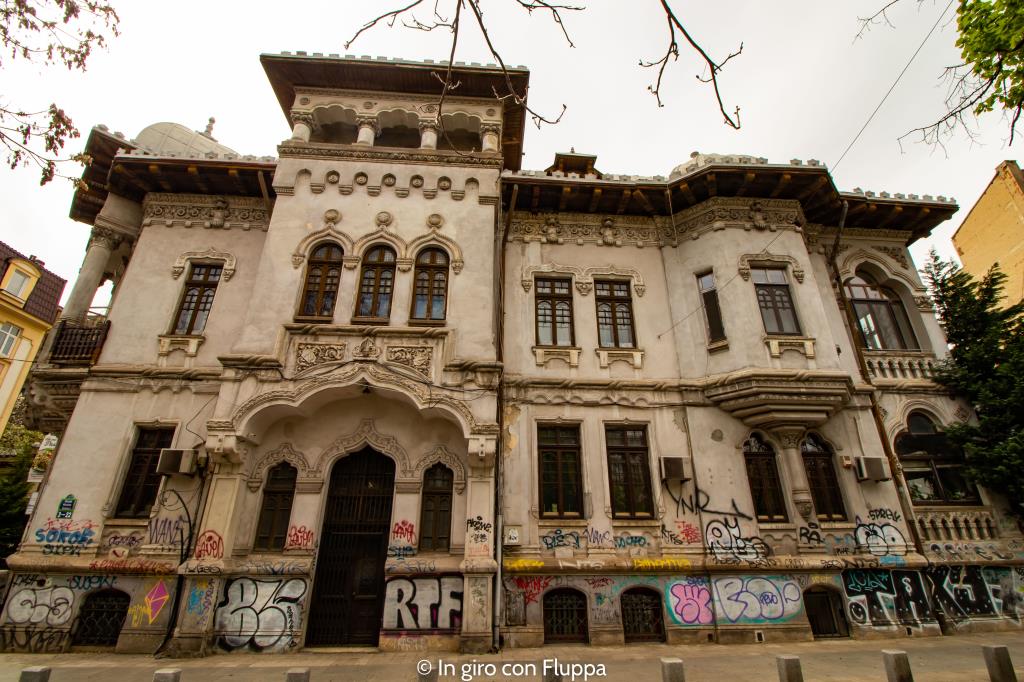
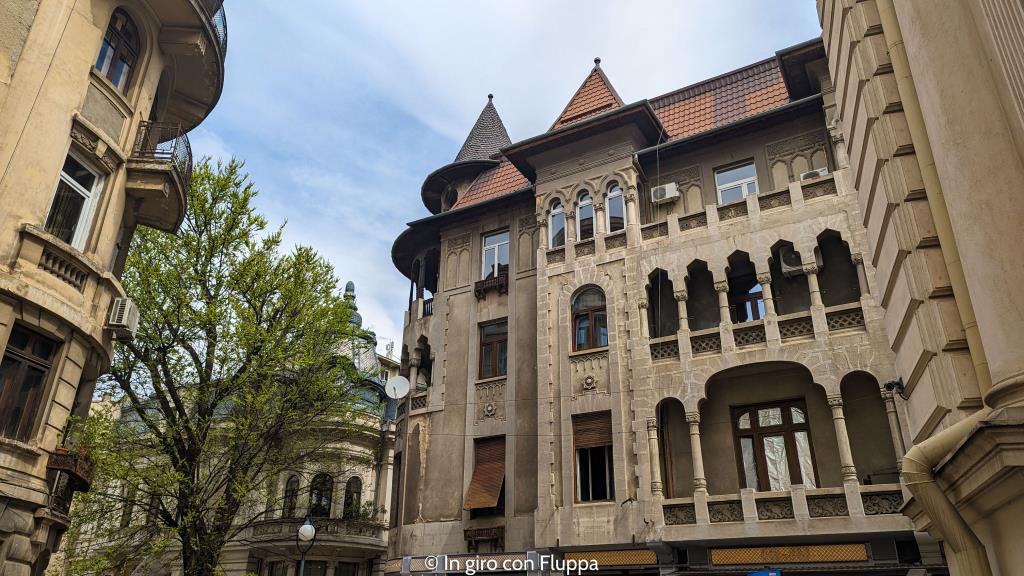
Here you’ll find several houses with Gothic and Romanian Renaissance architecture, as well as stylish restaurants and cafés that are very popular with locals, set along cobbled streets.

Take a walk through this area with no particular plan — you’ll be amazed by the uniqueness of the buildings and their details.

Biserica Boteanu

While walking through the Golescu district, you will probably come across Boteanu Church.

Its history begins around 1611, but about 110 years later it was replaced by a larger church built in the Brâncovenesc style.

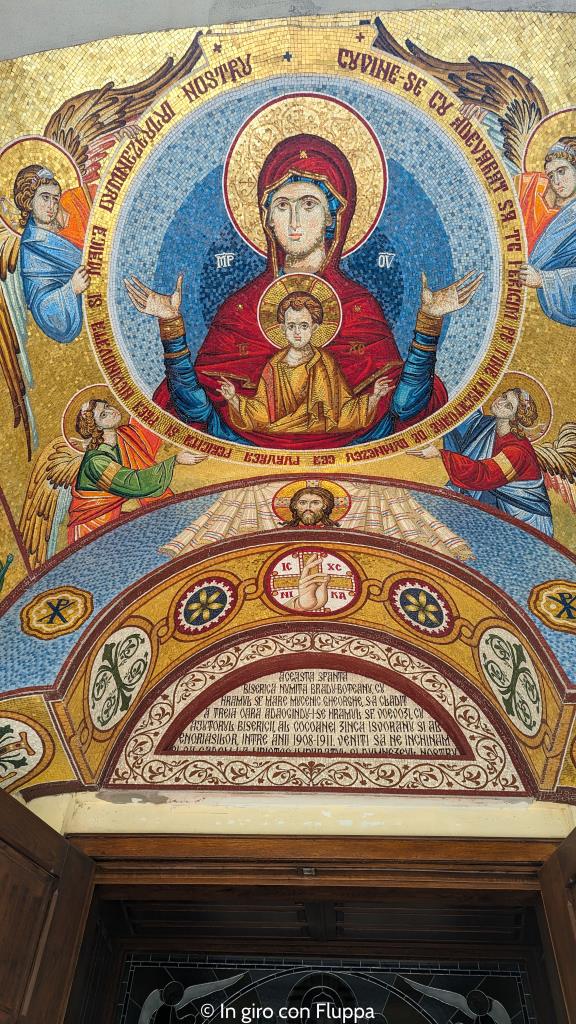
Boteanu Church features a charming arched entrance, topped with twin towers and decorated with carved stone details. Inside, icons, mosaics and frescoes cover and enrich every wall.

When i was there (2024), the exterior was under restoration, but it was still worth stepping inside for a look, as it is very beautiful.

Biserica Albă, the White Church

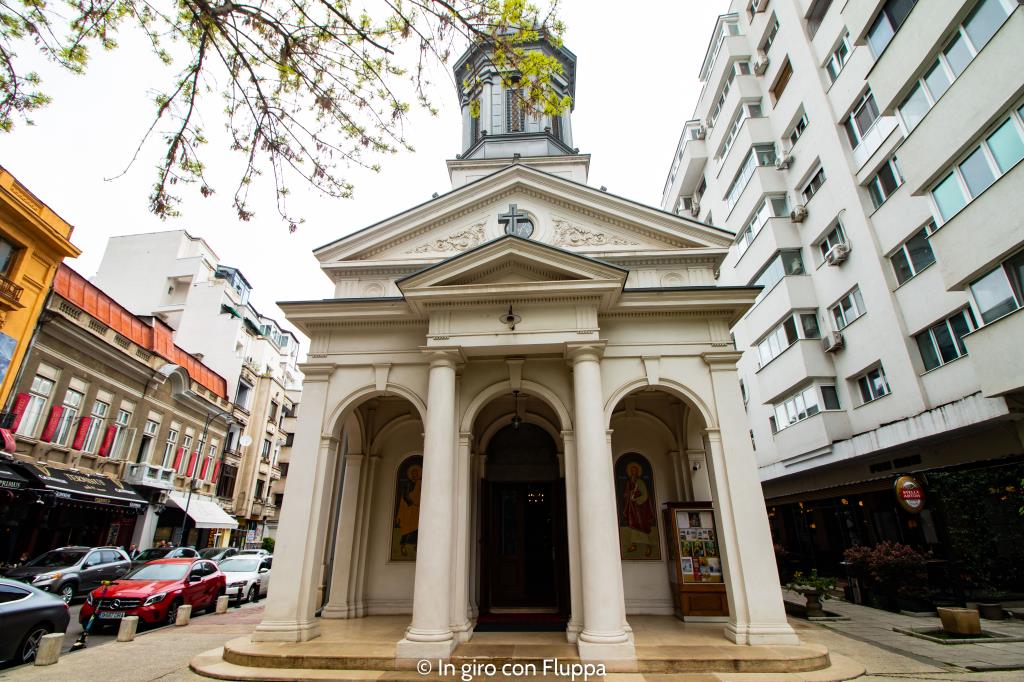
Still in the Nicolae Golescu area, but facing Calea Victoriei, you’ll find Biserica Albă, the White Church.

Set against brutalist buildings, this small white church has witnessed many historical events and survived the political and social changes that Bucharest has gone through over the centuries. It has withstood earthquakes, fires, and even the communist period, when many places of worship were demolished.

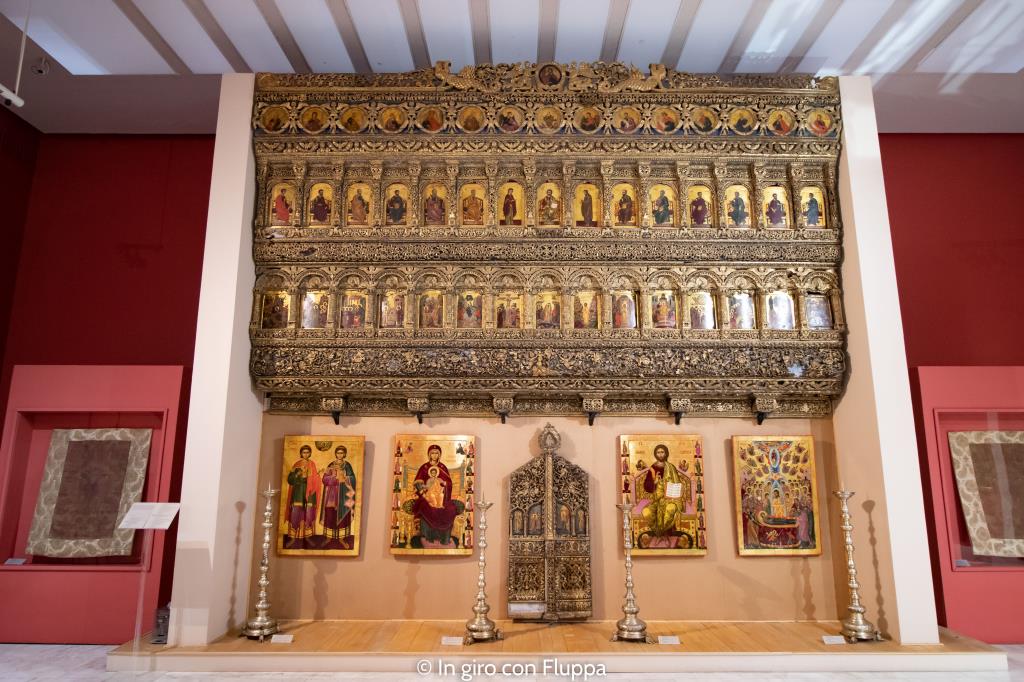
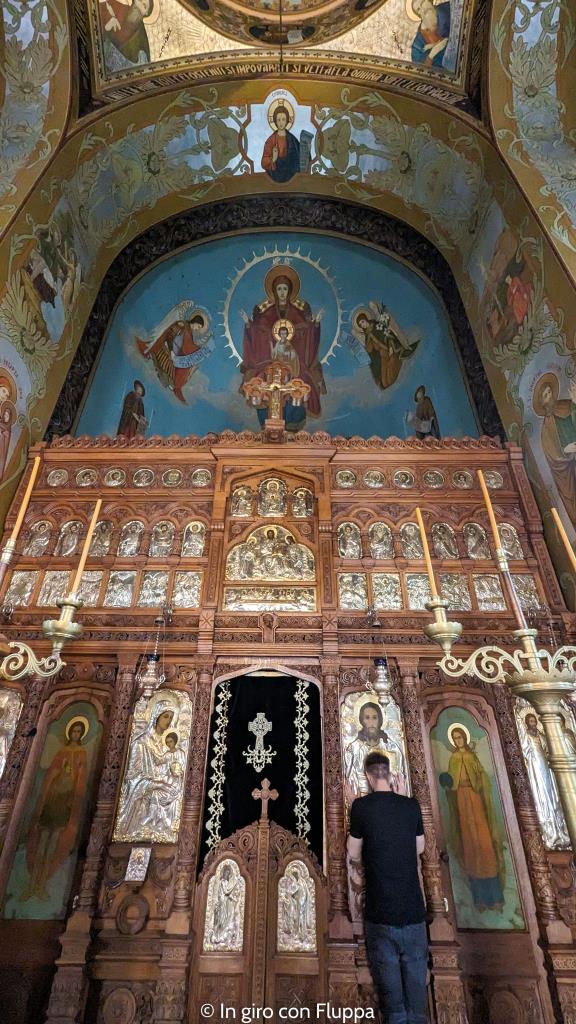
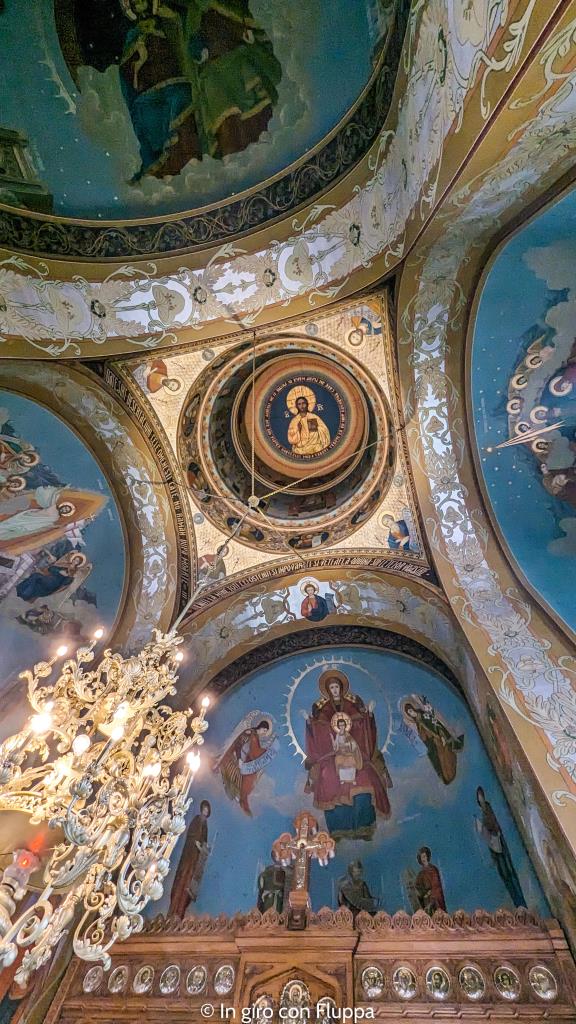
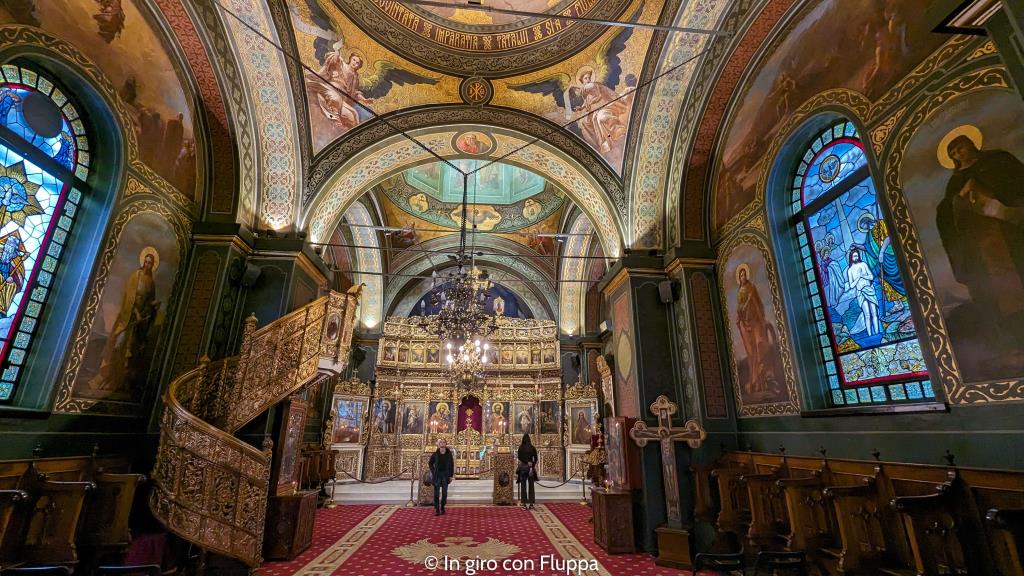
While the exterior of the church is immaculate, the interior is richly decorated with frescoes depicting biblical scenes and a majestic carved wooden wall adorned with Byzantine icons.

Romanian Athenaeum

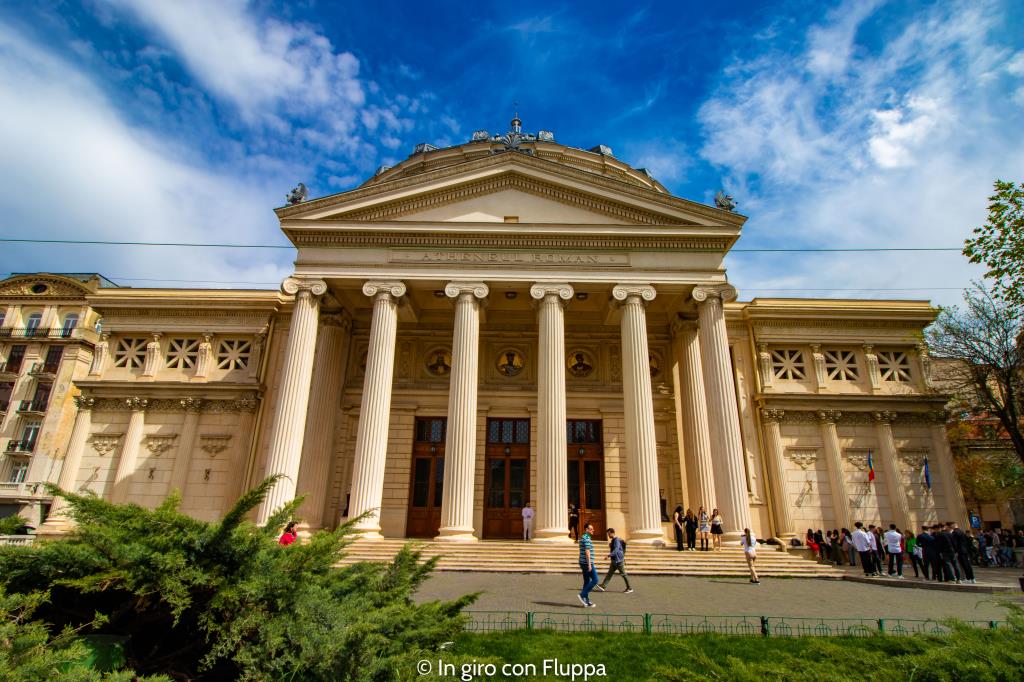
The Romanian Athenaeum is the oldest concert hall in Bucharest.

Inaugurated in 1888 in a neoclassical style and soon nicknamed the “Romanian temple of the arts”, it was listed as a historic monument in 2004 and became part of the European heritage in 2007.

To build this beautiful building, the citizens of Bucharest raised most of the funds over nearly 28 years, using the slogan: “Donate a leu for the Athenaeum!”

The auditorium has 600 seats in the main hall, while the rest are arranged in 52 boxes. A 75-metre by 3-metre fresco decorates the circular interior wall of the concert hall, depicting key moments in Romanian history.

The exterior of the Athenaeum is also one of the most popular Instagram spots — when I visited, there was a group of newly graduated students having their photos taken there.

Tickets for visiting the Athenaeum can only be bought in cash at the Casa Ateneului on Strada Constantin Esarcu, or at the artists’ entrance on Strada Benjamin Franklin. Visiting hours are quite limited, so make sure to check the official website to avoid disappointment.

Price: 10 lei
Opening hours: vary, do check the website
SWebsite: fge.org.ro
Grădina Cișmigiu park

One evening, my friends and I ended up having to walk through this park when it was already dark.
A bit hesitant, we went in with all our senses on alert, ready to protect each other if needed, only to quickly realise there was no need at all. Grădina Cișmigiu, a park in central Bucharest and not even a small one, is well lit, with open kiosks, families walking around and children playing in the playground until quite late. We were all surprised by this calm, relaxed atmosphere, especially used to Italian and British parks that close their gates as soon as night falls.

Founded in 1847, Grădina Cișmigiu features statues of important Romanian writers and other monuments dedicated to soldiers who died in wars, as well as benches, fountains and small bridges crossing the artificial lake that runs through the centre of the park. There is also a small island in the lake with a restaurant on it.

The park can be enjoyed all year round: in summer you can rent rowing boats, while in winter the artificial lake is drained and turned into an ice-skating rink.

Grădina Cișmigiu Park is open 24 hours a day, every day, with free entry.

Triumphal Arch

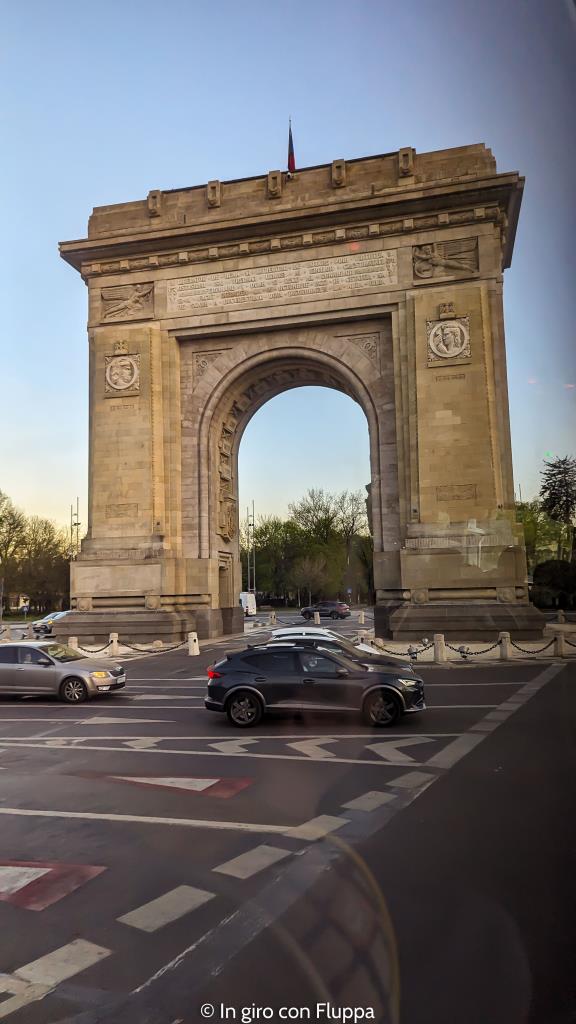
On the way to and from the airport, you will almost certainly pass by Bucharest’s Triumphal Arch.

The Arcul de Triumf was first built in a hurry in 1878, when Romania gained independence, so that troops could march through it as they entered the city. This first arch was made of wood, a material that disintegrated within a few decades. A second version was rebuilt in 1921–22 after Romania’s victory in the First World War.

In 1936, it was rebuilt once more using a much more durable material — granite — which is the version that still stands today.

Standing 27 metres tall and designed in a neoclassical style, the arch was inspired by the Arc de Triomphe in Paris. On the southern façade, there are two bronze medallions depicting King Ferdinand and Queen Marie.

Today, the Triumphal Arch is one of Bucharest’s most recognisable landmarks. Military parades are held beneath it every year on 1 December, Romania’s National Day.

The Arch is located in Piața Arcul de Triumf, in the north of Bucharest, close to Herăstrău Park.

National Village Museum

The National Village Museum is a hidden gem you really shouldn’t miss, even if you’re travelling with children.

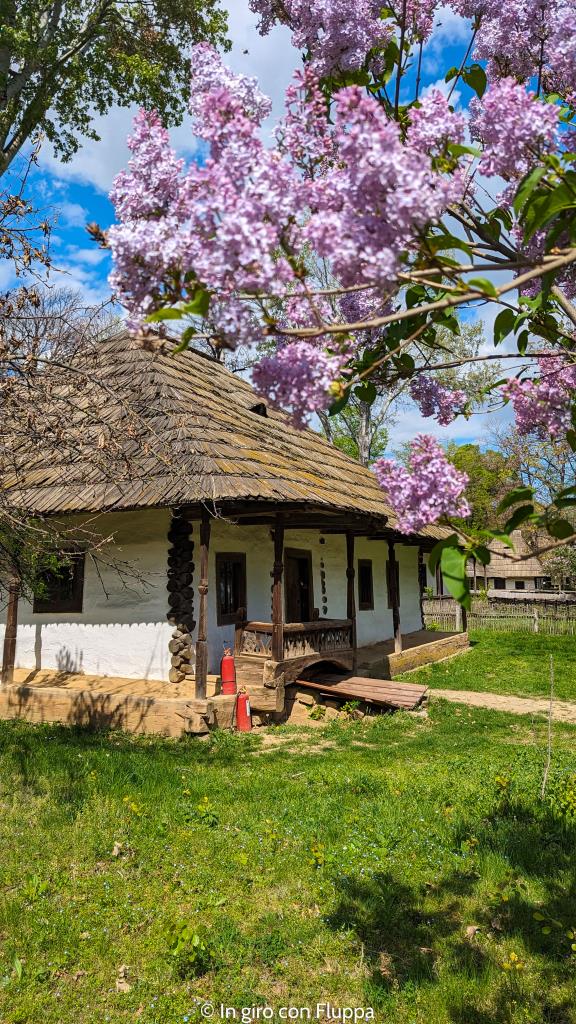
It is an open-air ethnographic museum located inside the large Herăstrău Park, in the north of Bucharest.

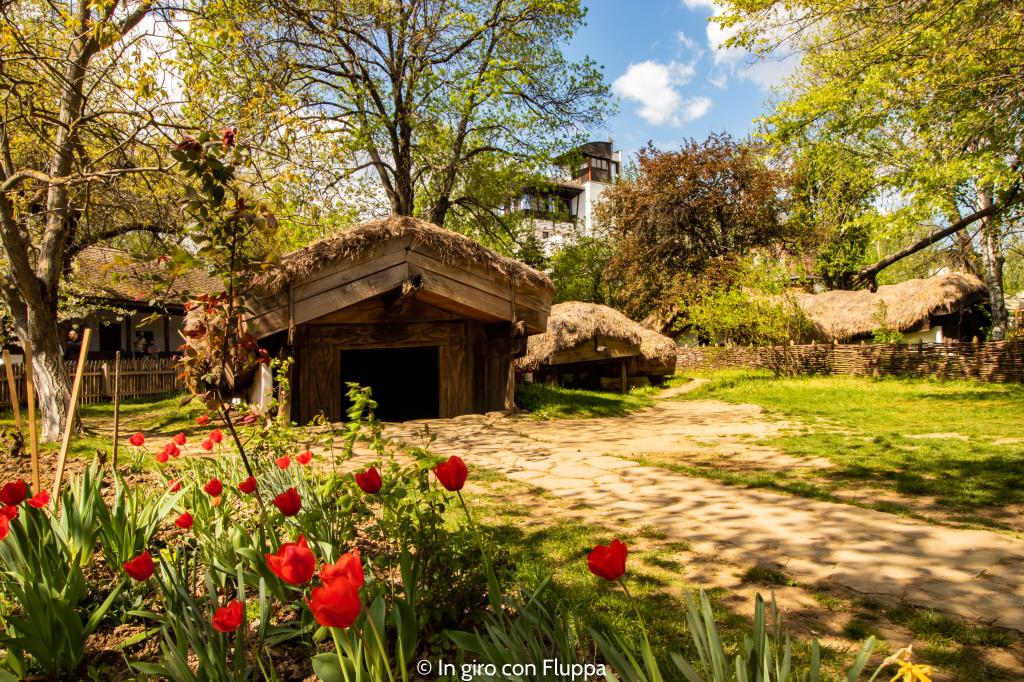
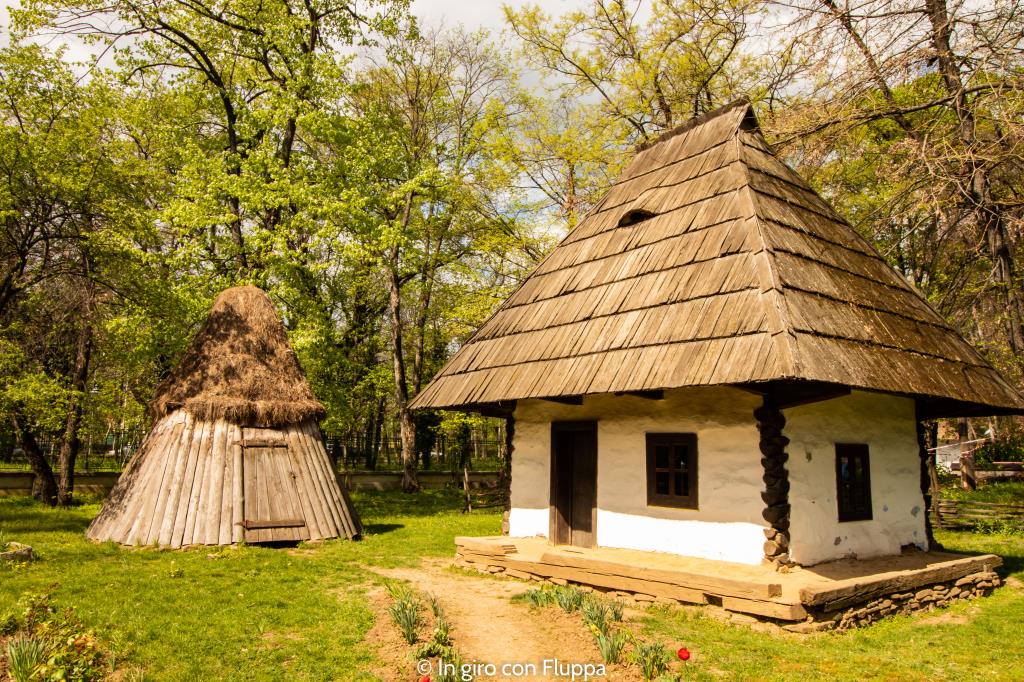
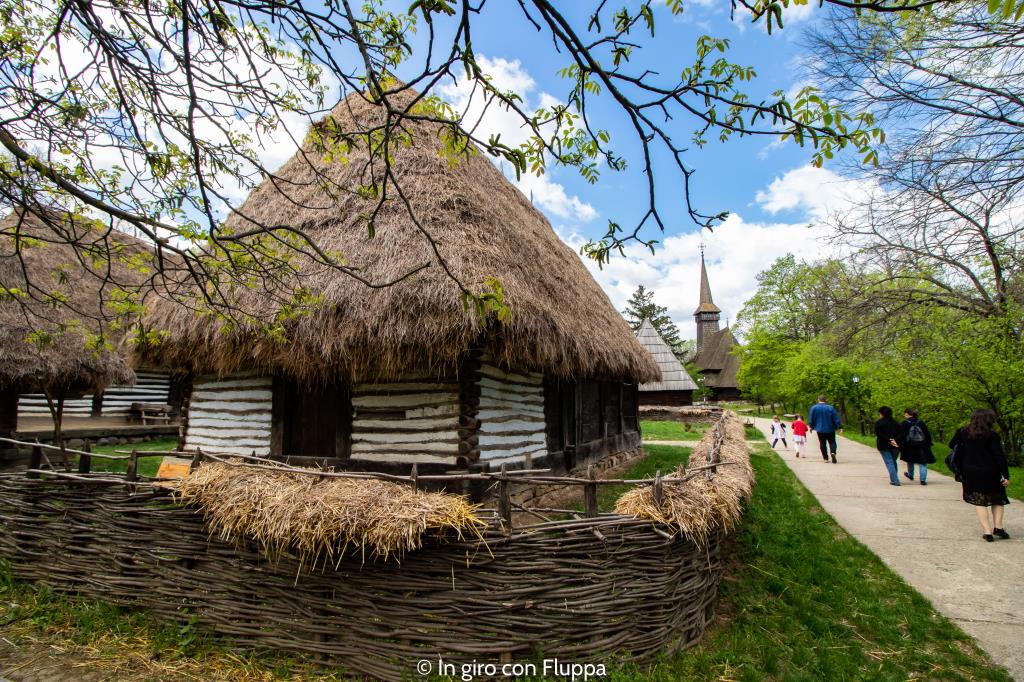
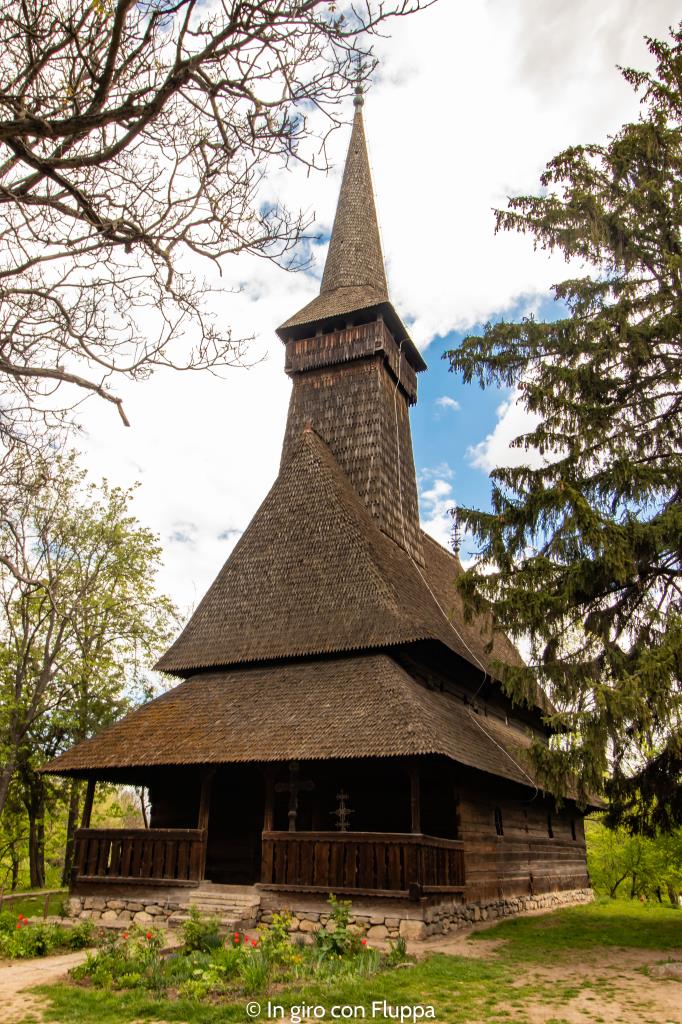
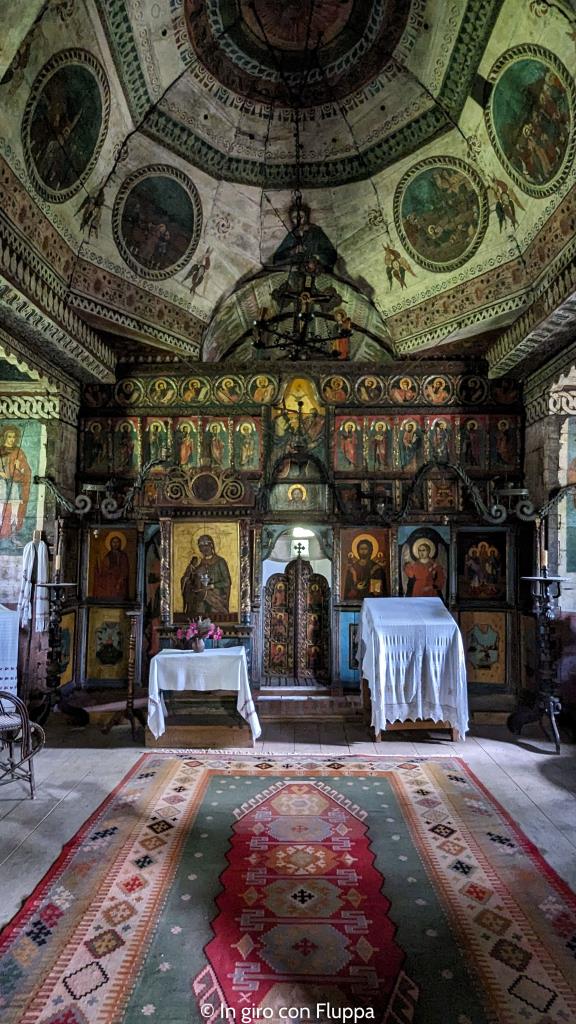
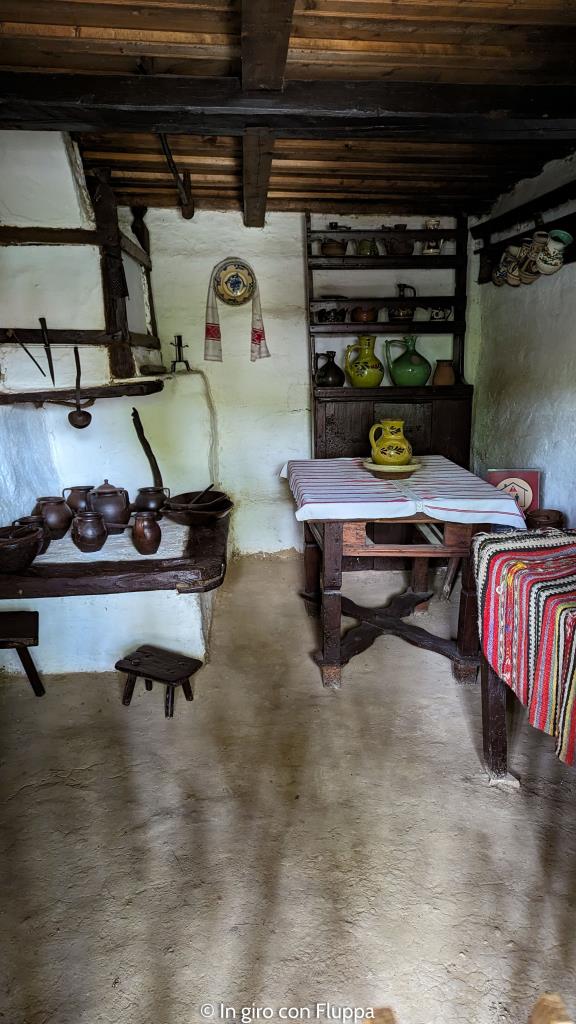
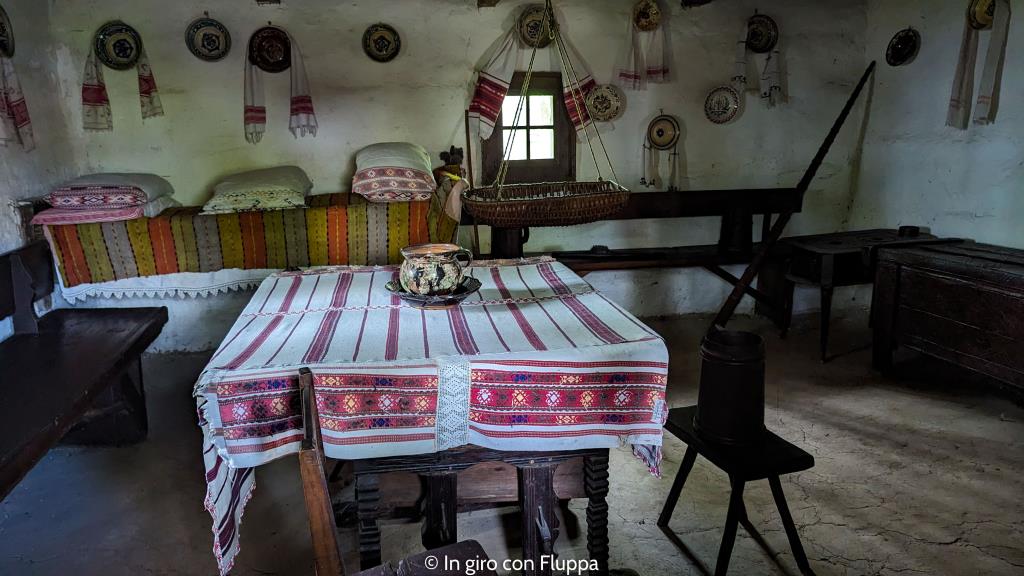
The museum brings together houses, windmills, wooden churches, monuments, straw-roofed huts, as well as kitchens, ovens, wine barrels and dovecotes from all over Romania, dating from the 17th to the 20th century.

As you walk through the park, you’ll see 123 authentic rural settlements and over 50,000 artefacts, representing different ethnographic regions of Romania, including Transylvania, Moldavia and others.

In spring, the park is especially lush, with many varieties of colourful flowers blooming both on the trees and in the gardens.

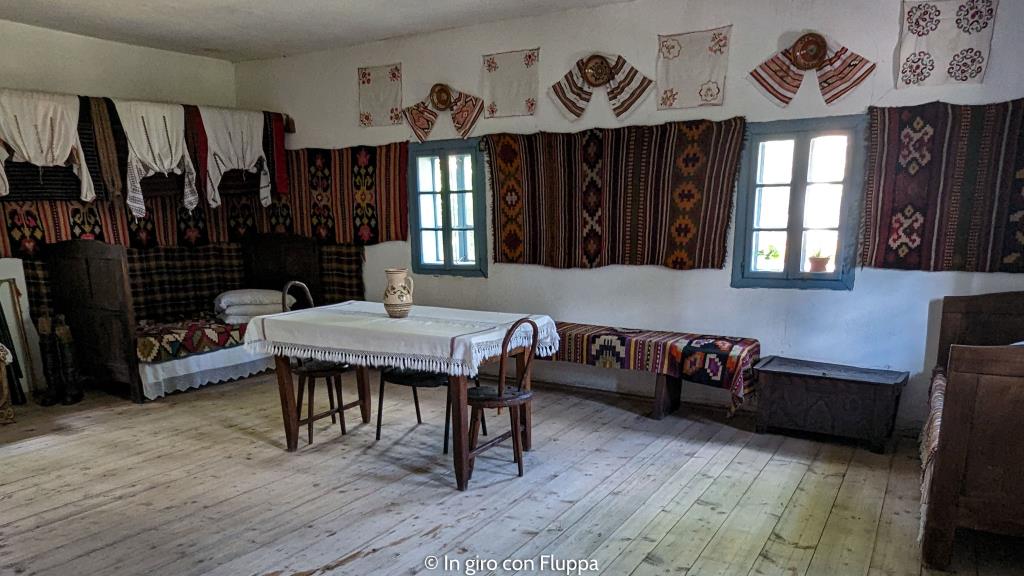
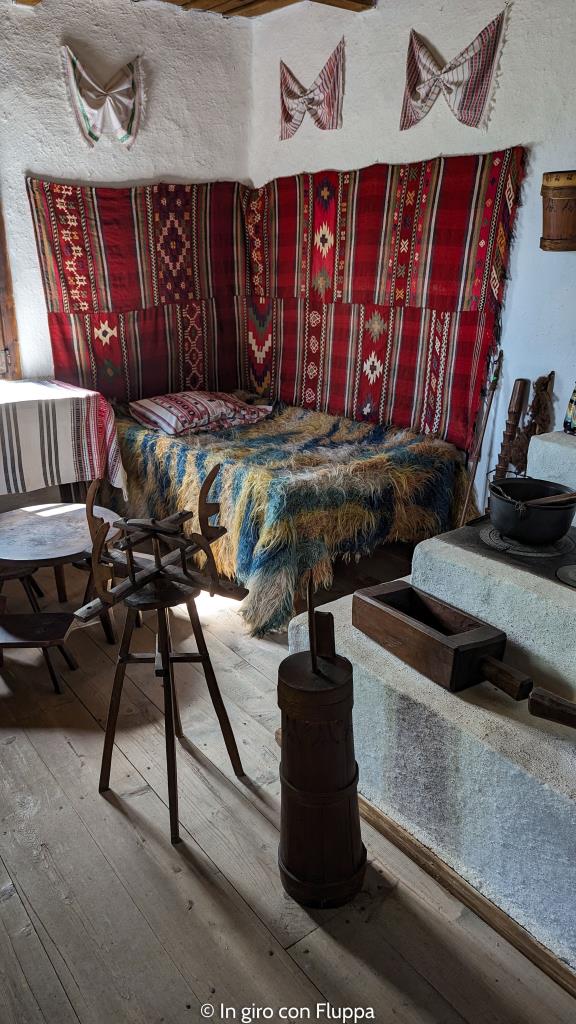
The best part is that several of the houses are furnished with kitchens, tapestries, furniture and household objects, and you can peek inside through the windows or even from the entrance of the rooms. Some churches still have frescoes on the walls, as well as carpets and chandeliers.

Take a look at this virtual tour from the museum’s YouTube channel:

Video credits: Muzeul Național al Satului „Dimitrie Gusti”

The Village Museum is ideally located halfway between Bucharest and the airport. If your return flight is in the afternoon or around lunchtime, you can spend the morning visiting the museum: once you leave the park, you’ll already be close to the airport, just a 15-minute taxi ride away.

However, don’t underestimate its size: the museum covers 100,000 m², so you’ll need at least two hours to visit it properly.

Price: adults 30 lei, students 8 lei, free for children under 6 Opening hours: open every day from 09:00 to 19:00, on Mondays it closes at 17:00 Website for info and updated opening times: muzeul-satului.ro

Bucharest Thermal Baths

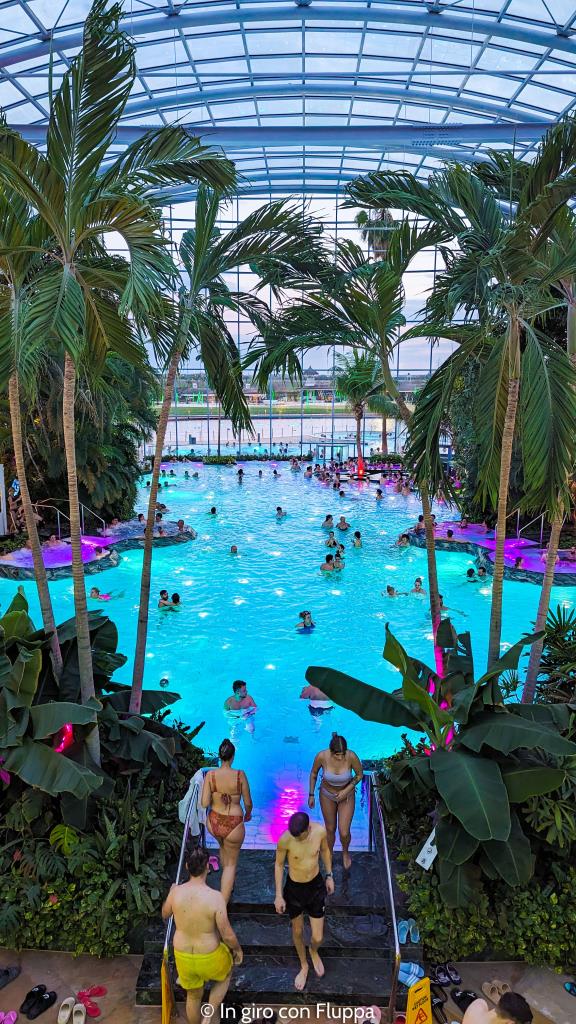
Another unmissable stop during your stay in Bucharest is by far the city’s most famous attraction: the beautiful, relaxing and also fun Bucharest Thermal Baths.

The Bucharest Thermal Baths are located north of the city, just beyond the airport. You can easily reach them by taxi or Uber in about 30–40 minutes from the city centre.

The complex is large and divided into 3 main areas:

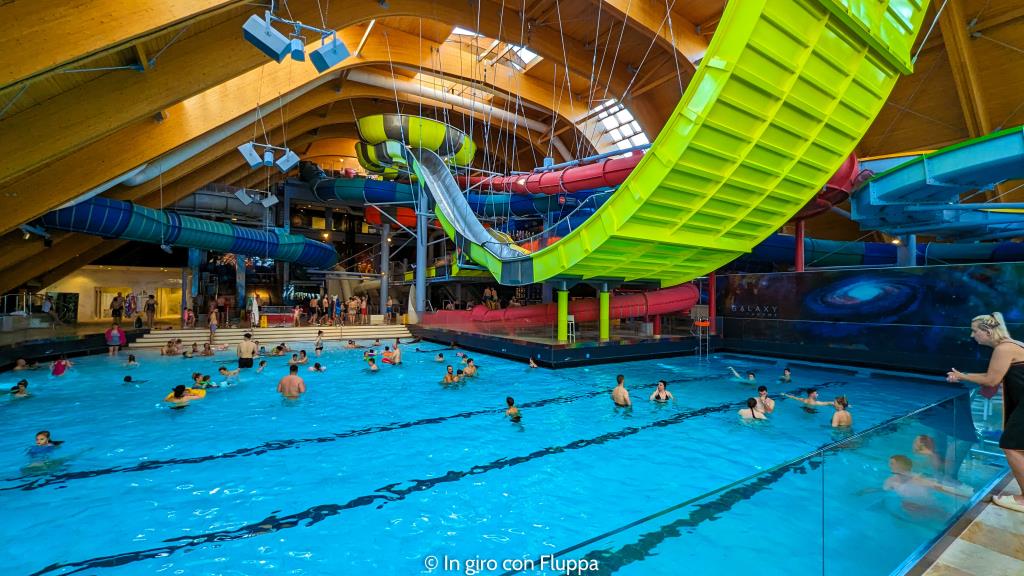
  • Galaxy: a zone for children and teenagers, with pools, water games and slides of different heights and speeds.
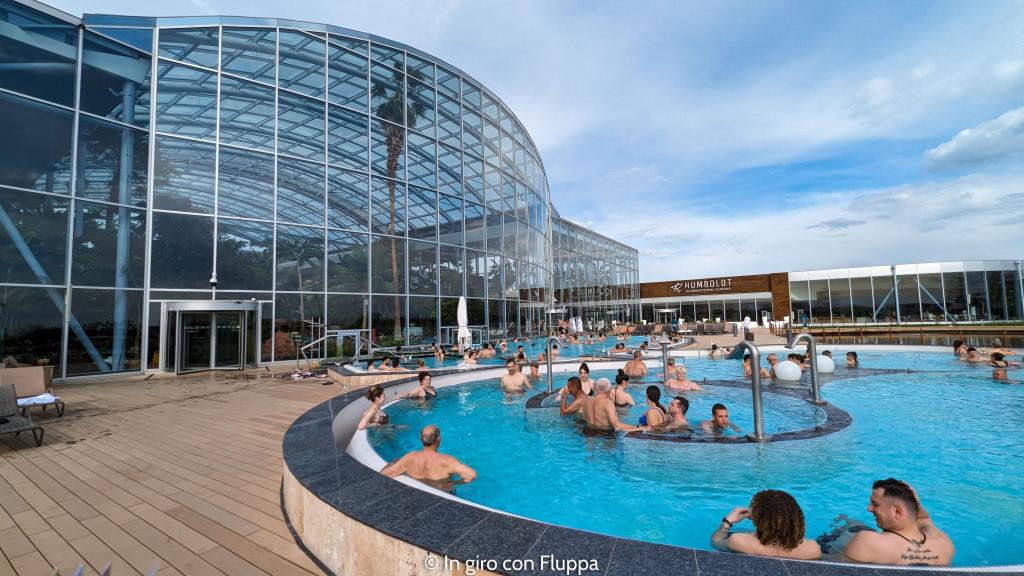
  • The Palm: this includes the main pool with jacuzzis, infrared loungers, hydromassage beds and soft relaxation alcoves. A ticket for The Palm also gives access to the Galaxy area.
  • Elysium: the wellness area on the upper floor, featuring several types of saunas, a waterfall shower, an outdoor solarium and a nice panoramic terrace overlooking the botanical garden inside The Palm area. A ticket for Elysium also includes access to The Palm and Galaxy.

The beauty of the thermal baths lies in their real botanical garden, with dozens of exotic plants throughout all areas, which creates a very natural and relaxing atmosphere.

In addition to the indoor pools, there is also a heated outdoor pool, 3 restaurants, and several pool bars where you can grab a drink.

Towels, bathrobes and slippers can be brought from home or rented on site for an extra fee.

Tickets can be bought online on the official website of the baths, or at the entrance. In general, there is no need to book far in advance (we bought ours the day before, for example), but during peak season I would recommend booking a few weeks ahead — just in case!

Price: ticket prices vary depending on duration (3 hours, 4.5 hours or full day) and area (Galaxy, Palm, Elysium). For example, a 4.5-hour ticket for Elysium access (which also includes the other areas) currently costs 155 lei, around €30.
Opening hours: Monday–Thursday 10:00–23:00, Friday and Saturday 09:00–00:00, Sunday 09:00–23:00.
Website for info, prices and updated opening times: therme.ro

One-day tour to Transylvania

If you have an extra day, I strongly recommend a one-day tour in Transylvania, like the one I did with my friends: you'll board a shared bus at 7 in the morning and, crossing the beautiful Carpathian Mountains, you'll visit the magnificent Peleș Castle, Bran Castle (known as “Dracula’s Castle”), and the medieval city of Brașov, returning to Bucharest in time for dinner.

I will go into more detail in a specific blog post, but in the meantime you can check availability and prices using this widget:

Powered by GetYourGuide

Another very interesting option would be hiring a car and exploring Transylvania independently — perfectly doable whether you’re travelling with friends or with family.

With a car, you can move at your own pace, without fixed schedules, stop whenever you like, and even choose to spend one or more nights in Transylvania.

Here you can check car rental prices in Bucharest

FAQ

Is Bucharest dangerous?

Contrary to popular belief, Bucharest is not dangerous at all. I visited the city with a small group of female friends and we never felt unsafe or uncomfortable, neither during the day nor at night, whether we were in a group or on our own. As I mentioned in the section about Cișmigiu Park, I was surprised to see how a city park can feel calm, well lit and full of people even late in the evening, with families and children still out and about.

We used Uber to get around and all the drivers were friendly, polite and pleasant. I would confidently recommend Bucharest as a destination for solo travellers, while of course taking the usual precautions you would in any city in the world (trust your instincts, avoid walking alone in dark areas, respect local customs, read reviews of the area where you plan to book your hotel, etc.).

What to do in Bucharest at night?

Bucharest is very lively in the evening, especially in the city centre. Romanians love going out for dinner, drinks and dancing, so the city is full of restaurants, bars, taverns, cafés and clubs open until late at night.

I definitely recommend a dinner at the beautiful Caru’ cu Bere restaurant, and maybe a drink at the Nomad rooftop bar. You’ll be spoilt for choice!

What to see in Bucharest in 2 days?

If you only have two days in Bucharest, spend one morning on a free walking tour of the city and the afternoon at the thermal baths. On the second day, stay in the city centre and explore the Lipscani district, including Stavropoleos Church, the Cărturești Carusel bookshop, Caru’ cu Bere restaurant, the beautiful passages along Calea Victoriei, and if you have time, the Palace of the Parliament as well.

what to see in Bucharest in 3 days

I hope this post has been useful for planning your itinerary in Bucharest!

Here are my other posts about Romania:

If you have any questions, feel free to email me at info@ingiroconfluppa.com

See you soon!

firma di Flavia Iarlori